Every association operates inside renewal cycles, but few manage them with the structure and precision they deserve. Most renewals are treated as a notification task rather than a strategic revenue window. The truth is simple. Your 90-day membership renewal window is the period when members form their final perception of value. Their engagement, responsiveness, and decision-making accelerate, and your communication must match that tempo.
Leaders who treat renewals as a renewal date, not a renewal timeline, lose predictable revenue. Meanwhile, leaders who design a structured 90-day cadence reduce churn, strengthen retention confidence, and reinforce member value at exactly the right moments. In this post, you’ll learn how the 90-day model works, why it outperforms last-minute reminders, and how to operationalize it inside your membership CRM.
If you want a quick overview of a system that centralizes renewals, workflows, billing, and communication, book a demo of our membership management software.
Key Takeaways
- The 90-day renewal window strengthens retention when managed as a structured timeline.
- Engagement, billing verification, and value reinforcement should begin 90 days before expiration.
- Automated workflows eliminate manual tasks and reduce missed communication.
- Unified engagement data helps identify churn risk early.
- Glue Up centralizes membership, billing, outreach, and reporting to support a complete renewal cycle.
Why the 90-Day Renewal Window Works
You cannot influence retention with a single reminder. Members need context, relevance, and consistent touchpoints. A 90-day cadence aligns with behavioral patterns and gives your team space to create a structured renewal journey rather than a reactive one.
A Structured Timeline Mirrors Decision Behavior
Members review value in stages. They look at recent interactions, assess upcoming programs, verify their billing details, and evaluate what they received throughout the year. Ninety days gives them time to process this without pressure.
You Reduce the Financial and Administrative Rush
When renewals are compressed into the final week, every payment issue, failed transaction, or missing invoice becomes a crisis. Spreading communication across 90 days distributes the operational load and prevents administrative backlog.
Engagement Momentum Improves Renewal Likelihood
Members who attend events, participate in the community, or engage with content during this window show higher renewal intent. A structured 90-day approach lets you activate that momentum.
Predictive Signals Become Clearer
Member silence, inactivity, or lack of response becomes a warning sign. You gain clarity on who needs outreach, who needs support, and who may require value reinforcement.
The 90-day window gives you the time, structure, and insight required to manage renewals with intention.
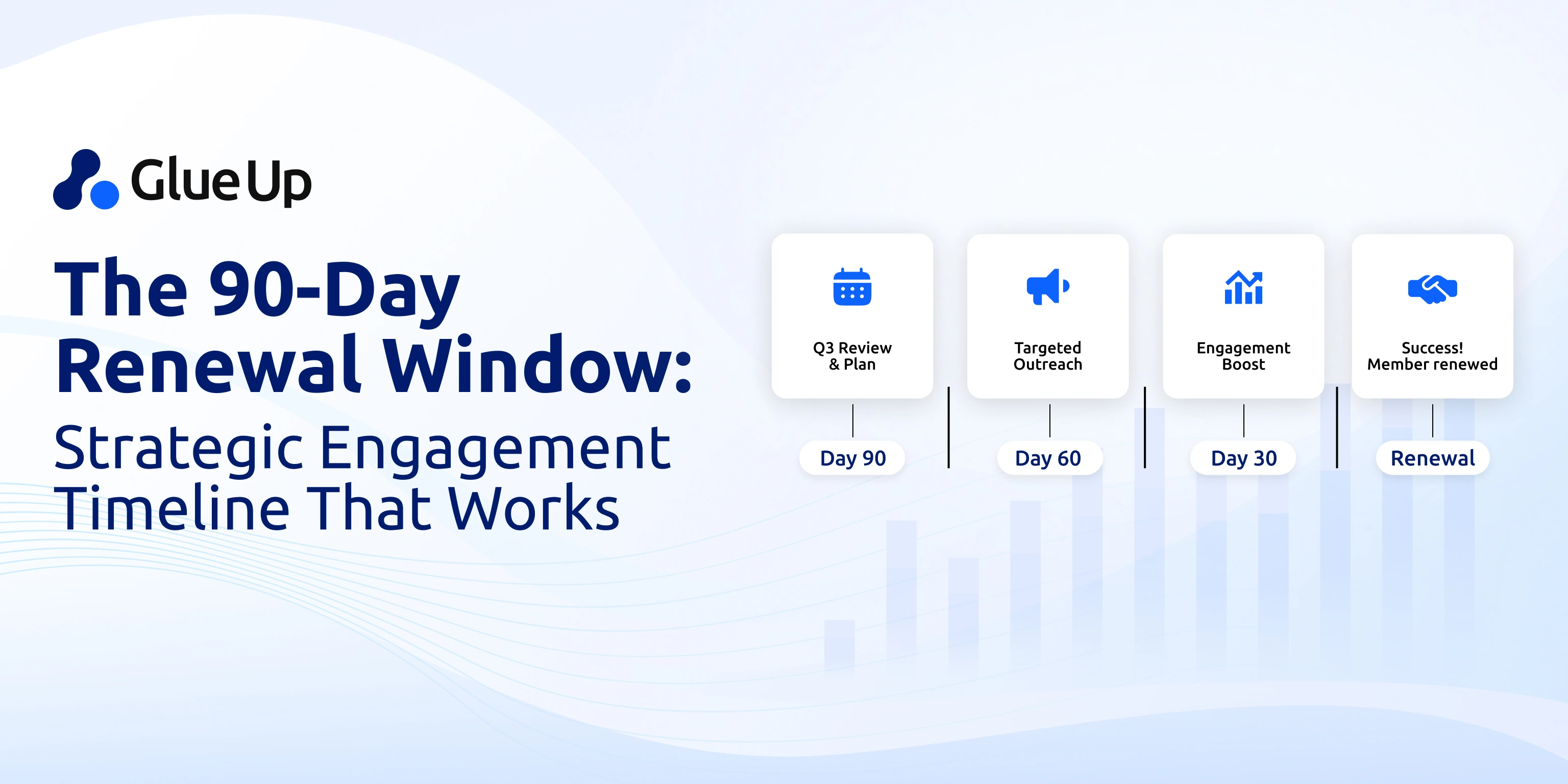
The 90-Day Engagement Timeline Associations Should Follow
A 90-day renewal window is not a countdown. It is a sequence. Each stage reinforces value and eliminates friction.
Day 90: Awareness and Value Recall
You start by reinforcing what the member gained. Highlight programs, access, events, and outcomes tied to their membership tier. This is not a sales pitch. It is a value reminder.
Day 60: Administrative Alignment
You verify billing details, auto-renew settings, payment methods, and contact information. This step protects cash flow and reduces involuntary churn. Members appreciate clarity long before the invoice triggers.
Day 45: Engagement Activation
Direct members toward upcoming events, roundtables, community conversations, or learning opportunities. This phase builds emotional alignment and strengthens perceived value.
Day 30: Renewal Sequence
This is when your renewal communication intensifies. Personalized emails, tailored messaging, and benefit summaries all operate together. Your CRM automates these workflows so nothing relies on manual effort.
Final Week: Personal Outreach
You focus on members who haven’t responded. This includes high-value membership tiers, longtime members, or individuals with declining engagement signals. Outreach becomes strategic, not desperate.
This 90-day model creates predictability, increases renewal confidence, and stabilizes revenue.
How to Operationalize the 90-Day Renewal Window
A strategy is only as strong as the system behind it. Without clean data and structured workflows, even the best renewal plans fall apart. Here’s how to implement your 90-day cycle with precision.
Start with Accurate Member Data
Your CRM needs up-to-date fields for renewal dates, membership tiers, billing status, and engagement history. Data integrity determines renewal success.
Design Automated Communication Cadences
Your system should trigger email sequences at 90, 60, 30, and 7 days. Automated workflows prevent missed outreach and keep communication consistent across all membership segments.
Track Engagement Trends Inside the Window
Members who stop attending events, open fewer emails, or disengage from community spaces signal churn risk. Monitoring these indicators lets your team intervene early.
Segment Members by Renewal Behavior
Not all members renew for the same reasons. A structured CRM helps categorize them by engagement level, membership tier, industry, or region to tailor messaging.
Measure Renewal Performance in Real Time
Track renewal rates, pending payments, bounced invoices, and failed transactions so your team can respond immediately.
Operational excellence inside the 90-day window depends on the quality of your membership management system.
How Glue Up Supports the 90-Day Membership Renewal Window
Glue Up gives associations the structure and automation needed to run a true renewal cycle instead of a reminder sequence. The platform connects membership data, communication, billing, and engagement in one system, which removes friction throughout the entire 90-day window.
Automated Renewal Workflows
Glue Up triggers renewal reminders at scheduled intervals. Messages can be personalized by membership tier, behavior, or engagement level so every member receives relevant communication.
Integrated Payments and Billing
Invoices, renewals, and payment confirmations sync automatically. Members can update payment methods through their self-service portal, reducing involuntary churn and administrative follow-up.
Unified Engagement Data
Attendance, community activity, email performance, and interaction history sit in one membership CRM. This gives you early insight into churn patterns and helps you prioritize outreach.
Dynamic Smart Lists for Renewal Segmentation
Members automatically flow into lists based on billing status, engagement behavior, or renewal stage. This eliminates manual tracking and helps your team operate with precision.
Turn Your 90-Day Window into a Predictable Revenue Engine
Retention is never an accident. It is the direct result of structured communication, clean data, and a predictable 90-day renewal system. When your team stops scrambling at the last minute and starts operating on a disciplined timeline, your members feel supported, your board gains confidence, and your revenue stabilizes.
If you want a platform built for structured renewals, workflow automation, and engagement visibility, book a demo of our membership management software and see how Glue Up supports the full 90-day retention cycle.
Quick Reads
- How to Build a Revenue Engine with Association Management Software
- Add-On Cart for Member Retention & Growth
- Simplify Multi-Currency Payment Posting for Community Chapters With Glue Up + Paygage
- AI Automation for Event Registration & Beyond
- Integrating AI into CRM for Membership Growth
- How to Build a Chapter Event Calendar
- What Is All-In-One Association Software?
- AI-Powered Member Check-In Software

It aligns with natural member decision cycles and gives your team time to reinforce value, correct billing issues, and activate engagement.
At 90, 60, 30, and 7 days, supported by targeted personal outreach during the final week.
Event attendance, email engagement, billing status, community participation, and past renewal patterns.
Automation ensures consistent communication, reduces manual errors, and creates a reliable experience across segments.