Association and chamber events are not holiday banquets or charity golf outings. They’re high-stakes gatherings where sponsors, members, and executives expect efficiency, relevance, and measurable value. These are individuals who manage budgets, negotiate partnerships, and evaluate ROI with every interaction. So, they usually have little patience for delays, confusion, or wasted time. To avoid these potential issues, forward-thinking organizations are actively adopting contactless technology like event QR code check-in found in top-shelf event management software like Glue Up.
Why? Because check-in is the first test of whether your event meets those expectations. Sponsors want quick access to the floor they’ve invested in. Members want proof that their dues translate into a seamless experience. And executives want to move from registration to networking without standing in line.
In this post, our objective is simple. We’ll look at the problems with long lines at events, share our take on the rise of contactless check-in technologies, and share the benefits of event QR code check-in for associations and chambers.
You’ll also see how Glue Up’s event management software streamlines registration, engagement, and reporting. For a quick overview, watch the video and book a quick demo for a full tour.
Key Takeaways
- Long lines and manual errors damage the attendee experience and weaken event ROI.
- Contactless solutions like event QR code check-in deliver speed, accuracy, and real-time visibility.
- QR scanning reduces staff workload and creates cleaner attendance data.
- Integration with membership and finance systems connects check-in to renewal and sponsor outcomes.
- Glue Up’s event management software makes check-in faster and strategically valuable with mobile apps, AI tools, and real-time dashboards.
The Problems With Traditional Check-In
Even in 2025, many associations still rely on legacy check-in setups: printed attendee lists, barcode scanners operated by volunteers, and manual badge handing. Those methods can’t keep pace when your event sails past 500–1,000 attendees. And real-time pressure brings out every weakness.
In recent studies, long wait times and bottlenecks at check-in counters are among the top complaints from event attendees. Vendors and organizers cite staffing constraints, outdated software, and unclear signage as leading causes of delay.
The hidden costs are steeper than you think: higher labor expenses from overtime, lost revenue when frustrated attendees skip sessions, and reputational risk with sponsors.
Here are the most common pitfalls:
- Queue Overload at Peak Times: When several hundred people arrive at once, your door becomes a choke point. Without scanning speed or self-check-in options, bottlenecks form quickly, causing attendees to lose patience or even skip entry.
- Manual Errors and Data Drift: Typographical mistakes, duplicate entries, or lost paper passes all erode the integrity of your attendance records. That creates gaps in your reporting and weakens your post-event analytics.
- Inefficient Use of Human Capital: Every staff or volunteer member assigned to check-in is not doing higher-value work elsewhere, like sponsor engagement or floor management. Slow check-ins increase labor costs and raise risk of staff burnout.
- Poor First Impression for High-Value Attendees: Sponsors, board members, and executives arrive expecting high efficiency. Standing in a line or dealing with badges not ready sends a signal that the event is disorganized—and fragments trust before the program even begins.
- Limited Real-Time Visibility: Traditional methods do little to give you live insights. You won’t know how many people remain outside, where lines are forming, or if you’re headed for overruns or capacity issues.
- Missed Data & Attribution Opportunities: With manual check-in, you lose the chance to tie attendee behavior to membership data, segment real profiles, or feed attendance into sponsor dashboards. That blunts post-event value for your organization.
The Emergence of Contactless Check-In Technology
The frustrations of traditional check-in have accelerated the shift to contactless systems. As attendees expect efficiency comparable to air travel or banking apps, paper lists and manual badge handling feel outdated.
So, associations and chambers usually adopt or upgrade their event tools to ensure:
- Sponsors and VIPs skip the frustration of waiting in line.
- Members see their dues reflected in a professional, seamless experience.
- Executives and staff gain real-time dashboards showing exactly who has arrived.
- Capacity management becomes easier, especially in hybrid events where onsite and virtual participation need to be tracked together.
However, over the past decade, several technologies have reshaped how associations and chambers manage event entry. Each one addressed a specific problem with traditional methods, but only some have scaled to meet today’s expectations.
- Barcode Scanning: Once the standard for ticket validation, barcode scanners reduced some manual errors but still required specialized hardware, slowing down throughput in large events.
- Self-Service Kiosks:Kiosks gave attendees autonomy to search their names, print badges, and confirm attendance. While highly effective in most contexts, they often create their own queues and require ongoing staff oversight.
- RFID Badges: Widely adopted at trade shows, RFID streamlined traffic flow and added session-tracking capabilities. The downside was higher costs for badges and infrastructure, limiting use in mid-sized associations.
- Mobile Event Apps: Apps like the My Glue App improve convenience by hosting tickets and agendas in one place. However, adoption depends on traffic, member engagement, attendee downloads, and varied digital literacy, making them uneven in practice. Of course, overall effectiveness depends on your target audience and user experience.
- Event QR Code Check-In: The most impactful evolution combines the convenience of mobile with the precision of digital scanning. Unique QR codes are tied to each registration, allowing attendees to check in instantly through a phone screen or printed badge. Organizers gain live dashboards, accurate data capture, and streamlined capacity management.
How Event QR Code Check-In Works
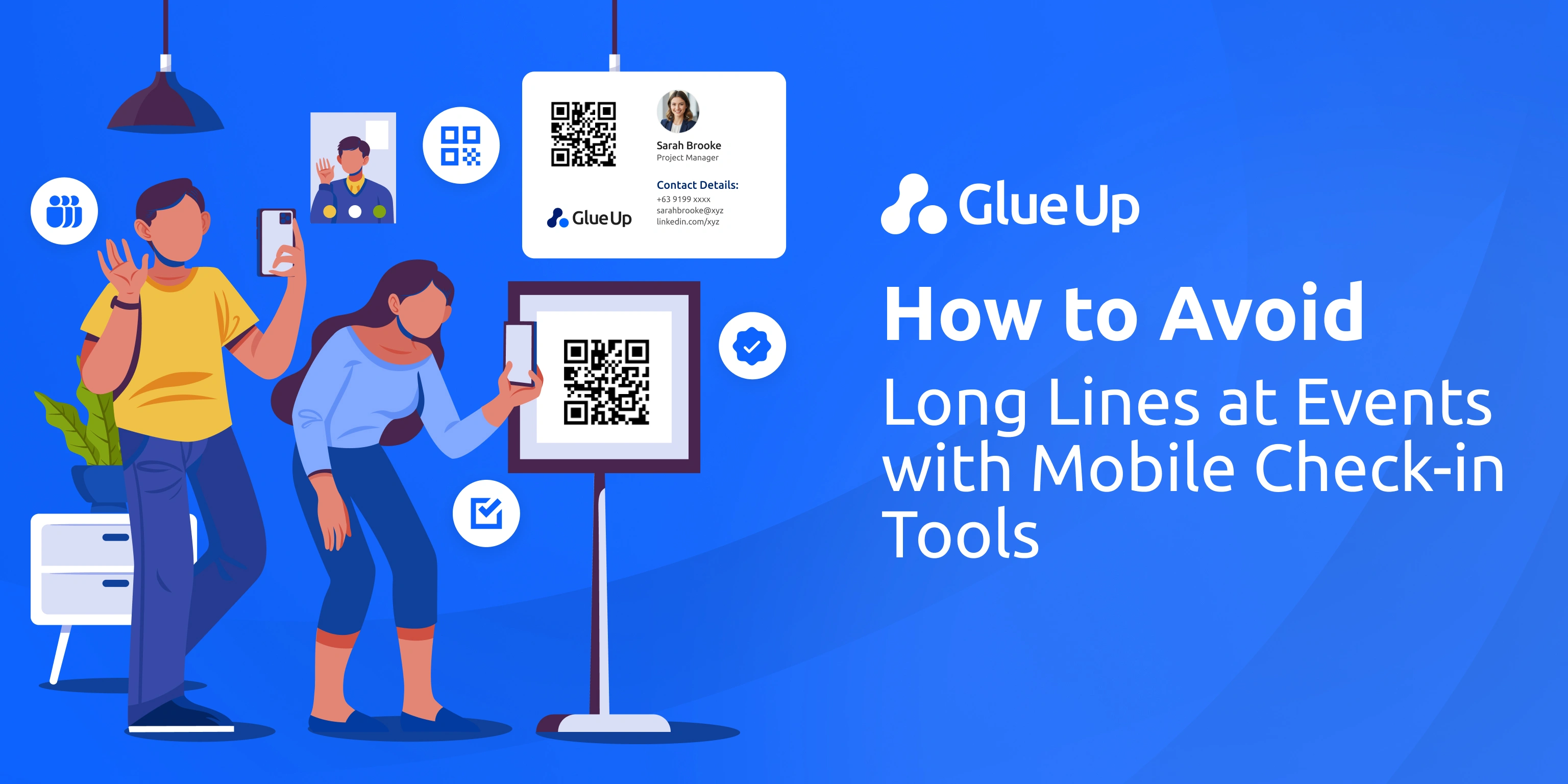
Event QR code check-in is straightforward in concept but powerful in execution. Each attendee receives a unique QR code when they register, usually delivered by email or through a mobile app. Onsite, staff or self-service kiosks scan the code, instantly validating the attendee’s record and logging their arrival in the event management system. This creates real-time visibility into who’s onsite, eliminates manual errors, and speeds up the process dramatically.
Best Practices for Associations
- Generate Unique Codes: Ensure every attendee receives an individualized code tied directly to their registration. This prevents duplicate entries or fraudulent use.
- Enable Mobile and Printed Options: Not every executive or sponsor will want to rely on their phone. Offering both digital and printed QR passes reduces friction.
- Test Hardware in Advance: Lighting, connectivity, and device settings can affect scanning speed. Run trials before attendees arrive.
- Offer Self-Check-In Kiosks: For larger events, provide kiosks or tablet stations where attendees can scan their codes themselves, freeing staff for higher-value work.
- Integrate with the CRM: Make sure scans feed into your association’s membership or event database. This allows you to connect attendance with renewal, engagement, or sponsor ROI.
Pitfalls to Avoid
- Over-Reliance on Wi-Fi: Scanning tools that require live internet connection can fail under overloaded networks. Ensure offline scanning modes or a backup internet connection are available.
- No Fallback Process: Always provide a manual lookup option for attendees who forget or can’t access their codes.
- Ignoring Accessibility: Not all attendees are tech-savvy. Clear signage and staff guidance are critical for smooth adoption.
- Data Silos: If check-in isn’t integrated with your membership or finance system, you lose the value of real-time insights and end up back in spreadsheets.
How Glue Up Implements Event QR Code Check-In
Glue Up embeds event QR code check-in directly into its event management software, connecting onsite operations with membership and reporting data in real time.
- Unique QR Codes: Every registration generates a personalized QR code, delivered through confirmation emails or the attendee’s profile in the My Glue App.
- Mobile Check-In Tools: Staff use the Glue Up Manager App to scan codes at entry points, instantly validating attendance and updating records.
- Self-Check-In Kiosk Mode: Tablets or kiosks allow attendees to scan their own codes, reducing staff load and accelerating throughput.
- Real-Time Dashboards: Every scan feeds directly into event dashboards, giving you live visibility into arrivals, capacity management, and no-show trends.
- CRM Integration: Attendance data syncs with the membership module, so your team can track which members, sponsors, or prospects actually participated.
- Post-Event Reporting: Exportable reports consolidate attendance, sponsorship, and engagement data for boards and executive teams.
By uniting QR code scanning with its wider ecosystem (finance, membership, and community), Glue Up ensures check-in isn’t just faster, it’s also strategically valuable.
Move From Lines to Real-Time Engagement
For associations and chambers, the check-in desk is more than an entry point—it’s the first impression. Traditional methods waste time, frustrate sponsors, and weaken data integrity. Event QR code check-in solves these challenges by combining speed, accuracy, and integration with your broader systems.
Glue Up makes this process seamless and enables you to give attendees the professional experience they expect while giving you the data you need. So, book a demo today and see how our event management software transforms check-in into a strategic advantage.
Frequently Asked Questions
How secure are QR codes for event check-in?
Each QR code is unique to the attendee and validated against the event database. Codes can’t be reused, reducing fraud risk.
What if attendees forget their QR code?
Glue Up’s Manager App supports manual lookup by name or email. Staff can still check in attendees quickly.
Can QR codes handle walk-in registrations?
Yes. Walk-ins can register onsite, generate a new QR code, and check in immediately without manual delays.
Does QR check-in work for hybrid events?
Absolutely. Online participants receive codes too, ensuring consistent attendance tracking across in-person and virtual formats.
How does check-in data help with reporting?
Attendance data syncs with Glue Up’s CRM, finance, and reporting modules, making it easy to show boards how events influence member retention and ROI.
Quick Reads
- Add-On Cart for Member Retention & Growth
- Simplify Multi-Currency Payment Posting for Community Chapters With Glue Up + Paygage
- AI Automation for Event Registration & Beyond
- Integrating AI into CRM for Membership Growth
- How to Build a Chapter Event Calendar
- What Is All-In-One Association Software?
- AI-Powered Member Check-In Software