By early 2026, most associations will face a familiar but uncomfortable realization. Member churn rarely begins at the national level. It begins quietly, locally, and often invisibly. Chapter meetings feel thinner. Email responses slow. Longstanding faces fade into absence. The challenge facing leadership today is no longer understanding that disengagement happens. The challenge is understanding when it begins and how to intervene before momentum is lost.
That is why member re engagement strategies for associations have moved from renewal tactics into operational design. In the new fiscal year, associations that continue to treat chapter disengagement as a volunteer problem or a cultural issue will struggle. Associations that treat it as a data visibility and workflow problem will regain traction.
This article examines why members disengage at the chapter level, how re engagement works when grounded in historical behavior, and why 2026 is shaping up to be a defining year for local member retention strategy.
Key Takeaways
Members rarely exit suddenly. Disengagement shows up first at the chapter level through reduced attendance, lower response rates, and longer gaps between interactions. Associations that track historical engagement signals recognize these patterns earlier and respond with intention rather than urgency.
Effective member re engagement strategies for associations rely on historical participation data such as event attendance, email interaction, and last activity dates. Decisions grounded in what members have already done create relevance, clarity, and trust in outreach efforts heading into 2026.
Chapter leadership burnout increases when volunteers rely on guesswork. Engagement scoring, automated smart lists for inactivity, and chapter level dashboards help leaders focus outreach on members who need reconnection most, reducing manual effort while strengthening local relationships.
Members respond when communication reflects their past involvement and local context. Localized re engagement campaigns and behavioral triggered emails that reference prior participation restore relevance and strengthen regional ties without adding pressure or friction.
Associations that invest in chapter level engagement recovery reduce national churn by improving local participation first. Unified visibility between national and chapter teams transforms re engagement from a reactive tactic into a sustainable leadership practice for the new fiscal year.
Quick Reads
The Moment Disengagement Actually Begins
Disengagement rarely announces itself. Members rarely send emails explaining distance. More often, disengagement arrives as silence.
Organizational research has long shown that people withdraw before they exit. Albert Hirschman’s exit voice loyalty framework explains that individuals tend to reduce participation long before severing ties. They disengage quietly when value feels uncertain or effort outweighs return. In membership organizations, chapters become the earliest place this withdrawal appears.
At the chapter level, engagement is visible in small signals. Event attendance drops. Volunteer interest thins. Informal networking slows. These signals rarely trigger alarms because no single data point looks dramatic. Over time, patterns form. When those patterns remain unseen, disengagement compounds.
For associations entering 2026, the lesson is clear. Chapter disengagement is a process. Member re engagement strategies succeed when organizations design systems to recognize that process early.
Why Chapters Absorb Disengagement First
Chapters operate at the intersection of value and effort. National membership often represents identity, credibility, and long term affiliation. Chapters represent time. Members experience chapters through meetings, conversations, logistics, and relevance.
Research across association management consistently shows that perceived relevance and belonging drive participation more than tenure or demographic traits. When chapter programming feels repetitive or disconnected from member reality, engagement erodes. When chapter communication feels generic, members disengage emotionally before disengaging behaviorally.
This dynamic explains why national renewal numbers often look stable while local engagement deteriorates. National teams see dues. Chapters feel absence.
The gap between those perspectives creates blind spots. Effective chapter engagement recovery requires unified visibility across national and local systems.
Why 2026 Is A Turning Point for Chapter Member Re Engagement
The urgency surrounding member re engagement strategies in 2026 reflects broader shifts in organizational expectations.
Members today operate with heightened awareness of time, relevance, and friction. Professional obligations remain heavy. Participation choices are intentional. Associations entering the new fiscal year face pressure to justify every local interaction.
At the same time, boards increasingly ask harder questions. They want to understand why chapters struggle to retain momentum. They want clarity around regional involvement metrics. They expect leadership to connect engagement patterns to organizational health.
This combination places chapter level engagement under sharper scrutiny than in previous years. Associations that continue relying on anecdotal feedback or reactive outreach will struggle to respond with confidence.
The Structural Drivers Behind Chapter Disengagement
Understanding why members disengage requires moving beyond surface explanations. Research and field experience point to consistent structural drivers.
Irrelevant local content weakens engagement when chapters repeat formats that once worked but no longer align with member needs. Chapter leadership burnout compounds this issue when volunteers lack tools to prioritize outreach. Siloed member data between national and chapter teams prevents early recognition of disengagement. Friction in local event registration adds unnecessary effort. Member ghosting behavior replaces feedback with silence.
Each driver alone feels manageable. Together, they create slow erosion.
This erosion explains why reconnecting inactive local members requires systems.
Member Re Engagement Strategies Depend on Historical Signals
Successful member re engagement strategies relies on historical data. Associations already hold the evidence they need. The challenge lies in organizing it.
Historical engagement signals include:
- Event attendance patterns over time
- Email interaction history
- Community participation frequency
- Last activity date tracking
- Touchpoint frequency across chapters
When these signals remain scattered, disengagement feels mysterious. When unified, disengagement becomes visible.
This approach aligns with association research showing that engagement improves when organizations act on documented behavior, rather than perceived intent. Historical visibility shifts outreach from reactive to deliberate.
How Engagement Scoring Clarifies Chapter Health
Member engagement scoring translates historical participation into clarity. It assigns context to activity without forecasting behavior. Scores reflect what has already occurred.
For chapter leaders, engagement scoring answers practical questions:
- Which members recently reduced participation
- Which members maintain consistent involvement
- Which members remain present nationally but absent locally
This clarity supports chapter engagement recovery by replacing guesswork with prioritization. Outreach becomes respectful and timely rather than broad or delayed.
Importantly, engagement scoring highlights current engagement state using historical data only.
Automated Smart Lists That Surface Inactivity
Automated smart lists for inactivity organize members based on defined criteria grounded in history. These lists help chapters focus effort where it matters most.
Examples include:
- Members missing multiple recent local events
- Members with declining email interaction
- Members whose last activity date exceeds a defined threshold
- Members active nationally yet inactive locally
By surfacing patterns, smart lists reduce leadership fatigue and support consistent chapter member re engagement.
Localized Re Engagement Campaigns Restore Relevance
Localized re engagement campaigns reconnect members to chapter value using context they recognize.
Effective campaigns reference:
- Past attendance
- Previous volunteer roles
- Familiar event formats
- Local professional interests
Research on personalization in membership communication shows higher engagement when outreach reflects individual history rather than generic messaging. Members respond when communication signals recognition.
Localized campaigns strengthen regional ties by restoring relevance without increasing pressure.
Behavioral Triggered Emails Based on Real Activity
Behavioral triggered emails activate based on documented engagement changes. These triggers rely on historical behavior rather than speculation.
Examples include:
- Follow up after repeated event absence
- Invitations tied to previously attended programs
- Reminders referencing past participation
This approach respects member autonomy. It acknowledges patterns without assumptions. It supports reconnecting inactive local members through familiarity rather than persuasion.
Chapter Level Engagement Dashboards Align Leadership
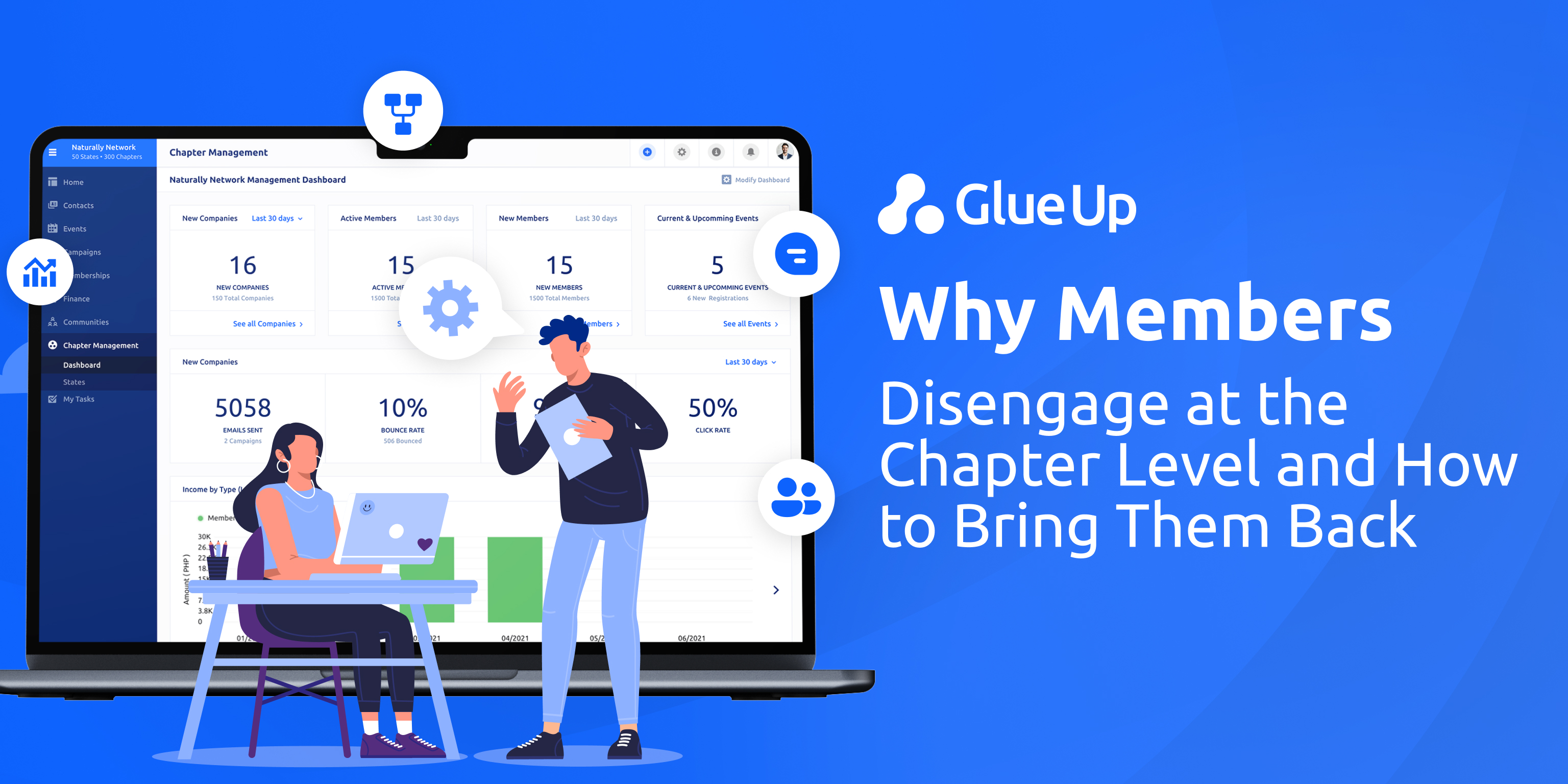
Chapter level engagement dashboards provide shared visibility across national and regional teams. Dashboards display trends, participation patterns, and community health score indicators.
Key benefits include:
- Unified understanding of regional involvement metrics
- Clear visibility into chapter engagement recovery progress
- Reduced tension between national oversight and local autonomy
Research on organizational alignment shows that shared data views improve collaboration and trust. When teams reference the same information, conversations shift from blame to problem solving.
How National Teams Support Chapters Through Data
National headquarters play a critical role in local member retention strategy. Support works best when national teams provide structure without replacing local leadership.
This includes:
- Offering standardized engagement scoring frameworks
- Sharing dashboards that highlight regional trends
- Enabling localized outreach workflows
- Providing visibility into national chapter health
This balance supports reduced national churn via local health.
Why Member Re Engagement Strategies Succeed When They Feel Human
Data alone does not restore connection. Systems create opportunity. People complete the work.
Successful chapter member re engagement blends structure with empathy. Outreach acknowledges history. Invitations feel personal. Leaders listen more than they persuade.
Research on belonging and organizational participation consistently shows that members re engage when they feel recognized rather than targeted.
This is where systems support human effort rather than replace it.
Glue Up As The Infrastructure Behind Chapter Re Engagement
Glue Up supports member re engagement strategies by serving as a centralized system of record for historical engagement.
Through engagement scoring, automated smart lists for inactivity, activity tracking for local events, behavioral triggered emails, and chapter level engagement dashboards, Glue Up enables associations to act on visibility rather than intuition.
National teams gain clarity. Chapters gain focus. Members experience relevance.
Glue Up organizes reality.
Why 2026 Rewards Associations That Act Earlier
Associations entering the new fiscal year face increasing expectations around transparency and responsiveness. Member patience for irrelevant or repetitive engagement continues to shrink.
Organizations that invest in structured member re engagement strategies in 2026 gain an advantage by restoring momentum before disengagement hardens.
This advantage compounds. Vibrant local communities support national stability. Strong chapters reduce renewal risk. Engagement becomes sustainable rather than cyclical.
Re Engagement as a Leadership Signal
By 2026, chapter disengagement will increasingly be interpreted as a leadership signal rather than a participation issue. Boards will evaluate whether organizations understand their engagement dynamics deeply enough to respond with confidence.
Member re engagement strategies reflect maturity. They show that associations understand where value lives, how members interact, and when intervention matters.
The Path Forward For Chapter Engagement Recovery
Re engagement works best when associations stop asking why members disappeared and start asking when signals changed.
Historical data answers that question. Systems organize it. Leaders act on it.
Members return when organizations remember who they are, what they valued, and where they belong.
That is the future of member re engagement strategies for associations in 2026 and beyond.

Chapter disengagement usually begins when local participation loses relevance or consistency. Members step back when events repeat familiar formats, communication feels broad, or local networking value fades. Historical patterns such as declining attendance, reduced email interaction, and longer gaps between touchpoints reveal disengagement well before a member considers renewal decisions. In 2026, associations that observe these early signals strengthen local member retention strategy and protect national stability.
Member re engagement strategies for associations work by reconnecting members through familiarity and context. Using historical engagement data, chapters identify members whose participation slowed and invite them back into experiences they previously valued. This approach restores relevance, reduces friction, and strengthens regional ties. Re engagement succeeds when outreach reflects past behavior rather than broad assumptions about interest.
Engagement scoring organizes historical activity such as event attendance, communication interaction, and last activity date into a clear participation snapshot. Chapter leaders gain visibility into which members remain active, which show reduced involvement, and which benefit from timely outreach. This clarity supports chapter engagement recovery by focusing effort where reconnection carries the most impact during the new fiscal year.
Effective tracking combines event participation history, communication touchpoints, and engagement trends into chapter level engagement dashboards. These dashboards help national and regional teams view regional involvement metrics together. Shared visibility improves coordination, strengthens data driven chapter support, and allows leadership to guide localized re engagement campaigns with confidence in 2026.
National teams support chapter member re engagement by providing structure rather than control. This includes shared engagement scoring frameworks, automated smart lists for inactivity, and visibility into historical participation patterns. When national and chapter leaders work from the same engagement data, local outreach becomes consistent, relevant, and aligned with broader association goals for next year.