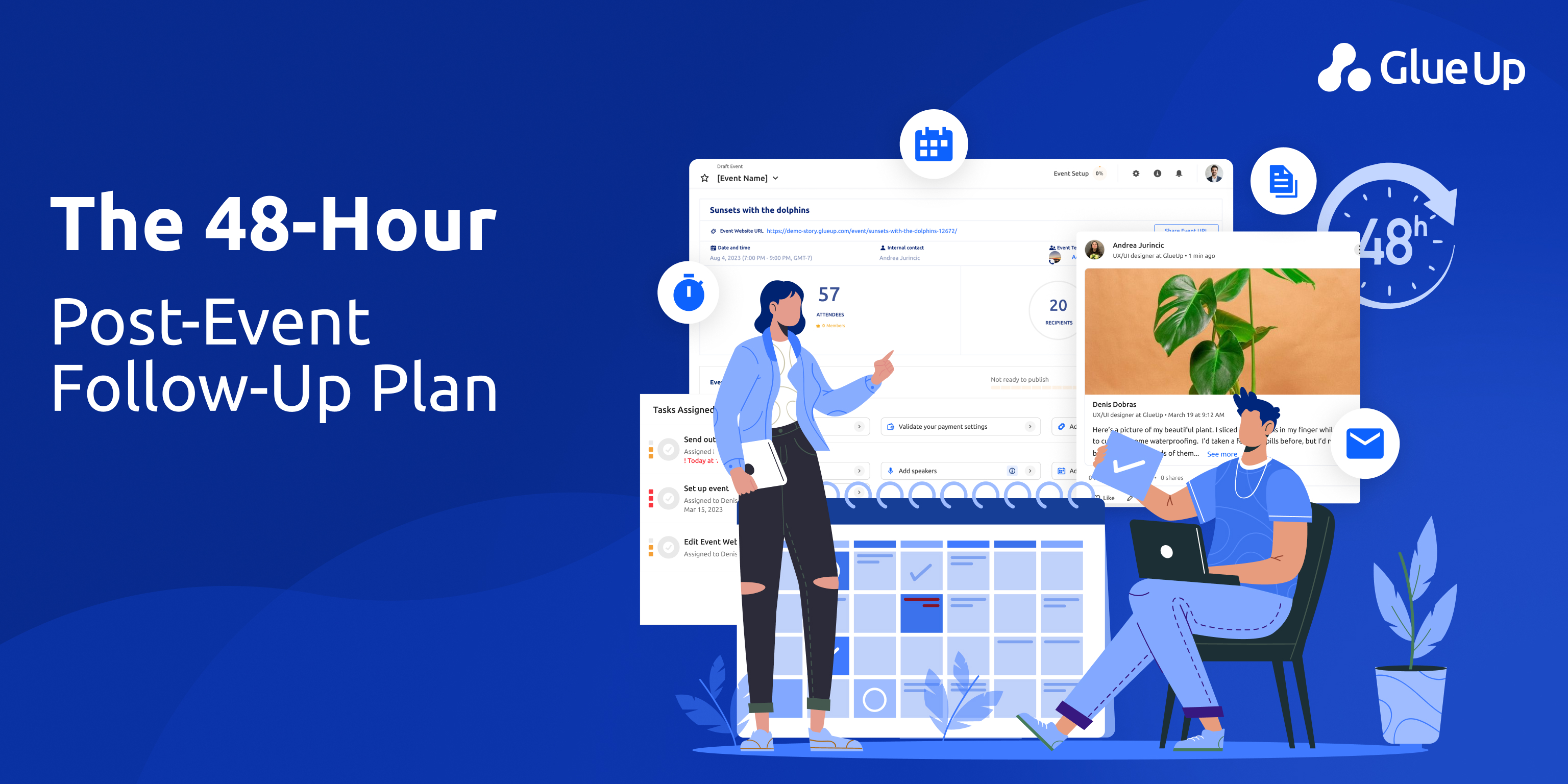
The post event follow up plan rarely receives the same attention as event promotion, speaker selection, or sponsorship sales. Yet in 2026 and the next fiscal year, it has quietly become the moment where most event value is either realized or slowly lost. Associations, chambers, and professional organizations continue to invest significant time and budget into events, only to see momentum dissolve in the days immediately after. The issue rarely sits with the event itself. It sits with what happens in the first 48 hours, when attention is still warm and decisions feel easy.
A post-event follow-up plan is no longer a courtesy sequence or a thank-you note sent when time allows. It functions as a conversion system, a trust signal, and an operational test of whether an organization understands how engagement actually turns into revenue, membership growth, and long-term loyalty. Heading into 2026, organizations that treat follow-up as a structured discipline outperform those that treat it as an afterthought, even when the events look identical on the surface.
This article examines why the 48-hour window now defines post-event outcomes, how high-performing organizations design a post-event follow-up plan that converts without pressure, and how teams use historical data and disciplined workflows inside platforms like Glue Up to make follow-up execution reliable at scale.
Key Takeaways
A post-event follow-up plan works best when outreach happens while conversations, context, and relevance remain fresh. Research and real-world event performance show that engagement drops quickly once attendees return to daily routines. Organizations that act inside this window turn attendance into action rather than relying on delayed outreach later in the cycle.
Thank-you emails alone rarely move relationships forward in 2026. High-performing organizations design follow-up as a structured system that guides attendees toward one clear next step. This approach improves event attendee lead conversion, strengthens trust, and aligns follow-up with revenue and membership goals.
Members, non-members, sponsors, and first-time attendees respond differently after events. A segmented post-event follow-up plan respects those differences and uses historical data to deliver relevant messages. This clarity increases engagement and reflects an organization that understands its audience beyond surface-level participation.
Follow-up messages that ask for one meaningful action reduce decision fatigue and increase response rates. Whether the goal is a membership conversation, resource access, or a follow-up call, the one action framework keeps momentum intact and makes engagement feel natural rather than forced.
The most successful post-event follow-up plans in 2026 rely on preparation, defined workflows, and accountability rather than improvisation. When teams use centralized systems and historical data to manage follow-up, events stop being isolated moments and start delivering consistent value across the new fiscal year.
Quick Reads
Why The Post Event Follow Up Plan Changed In 2026
Events have not changed dramatically. Human behavior around them has.
In earlier years, post-conference outreach lived in a looser rhythm. Attendees returned to offices with lighter inboxes and fewer competing signals. A follow-up email sent a week later still felt timely. That environment no longer exists. Attention cycles shortened. Calendars filled faster. Decisions that feel obvious during an event feel optional just days later.
Research across the event industry consistently points to the first 24 to 48 hours as the most responsive period for follow-up engagement. Event professionals and association researchers note that surveys, content downloads, and replies arrive at higher rates when outreach occurs while the experience remains vivid in memory. ASAE guidance on post-event surveys highlights that responses drop sharply when outreach drifts beyond that window, even when the event itself performed well.
This behavioral reality reshapes the post-event follow-up plan for 2026. The window where interest converts into action now closes faster. Organizations that respond with clarity inside that window create a sense of momentum. Organizations that delay create cognitive distance, even when the message content remains strong.
The shift is subtle but consequential. Follow-up timing now communicates organizational maturity as much as the event itself.
The 48 Hour Window as a Conversion Environment
The phrase “48-hour conversion window” sounds transactional, yet its power sits in psychology rather than sales pressure.
During an event, attendees build context. Conversations happen. Ideas connect. Relevance forms. That context remains active briefly after the event ends. Behavioral research on recency shows that experiences decay in recall quickly once daily routines resume. Follow-up inside this window feels like a continuation of the event. Follow-up outside it feels like a new interruption.
High-performing post-event follow-up plans in 2026 treat this window as a continuation of the experience rather than a separate campaign. Content arrives while conversations still feel recent. Calls reference sessions attended. Resources align with expressed interests. Decisions feel easier because context remains intact.
Event industry studies and practitioner research consistently reinforce this dynamic. Articles analyzing post-conference outreach show that reply rates and engagement fall meaningfully after 48 hours, even when message quality stays consistent. The drop rarely reflects disinterest. It reflects timing.
This is why the post-event follow-up plan increasingly functions as a revenue lever rather than a marketing tactic.
Why Thank You Emails No Longer Carry the Load
Many organizations still anchor their post-event follow-up plan around a single thank-you email. The intention is genuine. The outcome often disappoints.
A thank-you email acknowledges attendance but rarely advances a relationship. It asks for nothing, offers little direction, and leaves the next step ambiguous. In a crowded inbox, ambiguity slows action.
Research from event marketing studies shows that follow-ups combining appreciation with a clear next step outperform messages focused solely on gratitude. This requires clarity. When attendees understand what to do next and why it matters, engagement increases.
In 2026, the post-event follow-up plan shifts from appreciation to alignment. Appreciation still matters. Direction matters more.
Segmentation As the Foundation of the Post Event Follow Up Plan
Segmentation sits at the heart of effective post-event follow-up in 2026. One message to all attendees signals efficiency. It also signals a lack of understanding.
Members and non-members attend events with different motivations. Sponsors seek visibility and ROI signals. First-time attendees seek orientation. Returning attendees seek progression. Treating these audiences identically weakens relevance.
Event best practice research consistently highlights segmentation as a driver of higher engagement. Segmented post-event outreach improves open rates, response rates, and follow-through because the message aligns with the attendee’s context.
A strong post-event follow-up plan distinguishes at minimum between:
- members and non-members
- sponsors and general attendees
- first-time and returning participants
This segmentation relies on historical data the organization already holds, including registration status, attendance records, and prior engagement history.
Segmentation communicates respect. It tells attendees the organization remembers who they are and why they showed up.
The Post Event Follow Up Plan as a System
High-performing organizations in 2026 approach the post-event follow-up plan as a system rather than a campaign.
Campaigns are episodic. Systems repeat.
A systemized post-event follow-up plan includes:
- a defined 48 hour outreach window
- prebuilt audience segments
- prepared content distribution paths
- clear internal ownership for follow-up actions
- visibility into completion
This structure reduces friction at the moment execution matters most. Teams no longer scramble to decide what to send or who follows up. Decisions happen before the event begins.
Event operations research highlights that organizations with defined follow-up workflows convert a higher share of attendees into leads, members, or ongoing participants. The difference rarely reflects effort. It reflects preparation.
Content Distribution as a Strategic Lever
Event content holds more value after the event than during it.
Session recordings, slide decks, and recap summaries extend learning and reinforce relevance. Studies on content-led sales show that follow-up resources increase engagement when tied to specific attendee interests rather than generic libraries.
An effective post-event follow-up plan includes an event content distribution plan aligned with session attendance. Attendees receive materials connected to what they experienced rather than everything at once.
This approach serves two purposes. It reinforces value without overwhelming attention. It also creates natural moments for follow-up conversations grounded in shared context.
Organizations that delay content distribution often see diminished engagement, even when the content quality remains high. Timing shapes perception.
The One Action Principle In Post Event Follow Up
The most effective post-event follow-up plans in 2026 ask for one action.
Behavioral research consistently shows that decision fatigue increases when options multiply. When follow-up messages ask attendees to download resources, complete surveys, schedule calls, and explore memberships simultaneously, engagement slows.
The one action framework simplifies momentum. Each segment receives one clear next step:
- non-members invited to a membership conversation
- members encouraged to access exclusive resources
- sponsors guided toward a debrief
- prospects offered a follow-up call
This structure respects attention and builds trust. It also aligns internal teams around a shared objective.
Post Event Sales Strategy and Warm Lead Engagement
Events create warm leads by definition. The challenge sits in preserving that warmth.
Research on post-event sales strategy shows that outreach referencing shared experiences converts at higher rates than generic sales messages. Warm lead call scripts for events work because they anchor conversations in relevance rather than persuasion.
The post-event follow-up plan in 2026 includes structured CRM tasks that guide sales or membership teams toward timely outreach. These tasks rely on historical attendance data and participation signals rather than predictive scoring.
The goal is to support disciplined execution.
Sales Marketing Alignment After Events
Events often expose alignment gaps between marketing and sales teams.
Marketing celebrates attendance. Sales asks who to call. Without structure, momentum dissipates.
High-performing organizations use the post-event follow-up plan as a bridge. Event data flows into CRM tasks. Ownership becomes visible. Follow-up cadence aligns across teams.
Industry research on sales marketing alignment consistently shows that shared workflows improve conversion rates and shorten sales cycles. Events magnify this effect because engagement arrives prequalified.
Alignment transforms events from marketing moments into revenue engines.
Measuring The Post Event Follow Up Plan in the New Fiscal Year
Measurement in 2026 focuses on learning rather than judgment.
Organizations track:
- attendee to lead conversion rate
- follow-up completion timing
- content engagement after events
- response patterns across segments
These metrics rely on historical data and manual analysis rather than forecasting. They support refinement over time.
Boards increasingly expect this visibility. Post-event reporting signals operational maturity and accountability.
How Glue Up Supports Post Event Follow Up Execution
Execution determines whether strategy survives contact with reality.
Organizations using Glue Up centralize event data, attendee history, and communication workflows in one system. This structure supports the post-event follow-up plan without introducing complexity.
Teams use Glue Up to:
- segment attendees based on membership status and participation
- trigger post-event email automation aligned with segments
- distribute slides and recordings efficiently
- assign CRM tasks for follow-up calls
- track completion using historical engagement records
The value sits in coordination rather than prediction. Glue Up supports clarity, accountability, and timing, which define follow-up success in 2026.
Why The Post Event Follow Up Plan Signals Leadership Maturity
Events create visibility. Follow-up reveals leadership discipline.
A structured post-event follow-up plan shows that the organization understands how engagement converts into outcomes. It demonstrates respect for attendee time and internal effort.
As associations plan for the next fiscal year, follow-up strategy increasingly reflects governance quality. Boards notice. Members feel it. Teams operate with confidence.
Events End Systems Endure
Events conclude. Systems persist.
The post-event follow-up plan determines whether event energy compounds or dissipates. In 2026, organizations that design follow-up as a system rather than a gesture create durable advantage.
The first 48 hours remain small in calendar terms. Their impact stretches across the entire year.

The most effective post-event follow-up plan starts within the first 48 hours after an event ends. This window keeps conversations fresh, preserves context, and increases response rates because attendees still remember sessions, discussions, and people they met. In 2026, organizations that wait beyond this window see engagement slow even when event quality remains high.
A strong 48-hour post-event follow-up plan includes segmented outreach, timely content distribution such as slides or recordings, one clear call to action per audience group, and assigned follow-up tasks for internal teams. The goal is clarity and momentum rather than volume of messages.
Associations convert attendees into membership leads by aligning follow-up messaging with attendee context. A post-event follow-up plan that separates members from non-members and invites non-members into a focused membership conversation performs better than broad promotional outreach. Historical attendance and engagement data help guide these conversations.
Segmentation improves relevance and trust. Members, non-members, sponsors, and first-time attendees attend events for different reasons. A segmented post-event follow-up plan respects those differences and delivers messaging that feels intentional rather than generic, which increases engagement and follow-through.
Teams manage post-event follow-up more effectively by using centralized systems that already hold event and attendee data. A structured post-event follow-up plan supported by clear workflows and historical data allows teams to execute consistently in the new fiscal year without relying on guesswork or manual coordination.