The Tradeshow Logistics Exhibitor Plan has quietly become one of the most decisive factors in exhibitor retention, sponsor confidence, and long-term event credibility. In 2026, as member-based organizations enter a new fiscal year under sharper financial scrutiny, the Tradeshow Logistics Exhibitor Plan defines whether exhibitors experience a show as a transaction or as a professional partnership worth repeating.
Most exhibitors never talk about logistics when they decide to return. They talk about how supported they felt. How prepared they were walking in. How clearly value showed up when leadership asked for results. The Tradeshow Logistics Exhibitor Plan sits underneath all of that, shaping outcomes before the show opens and long after the floor clears.
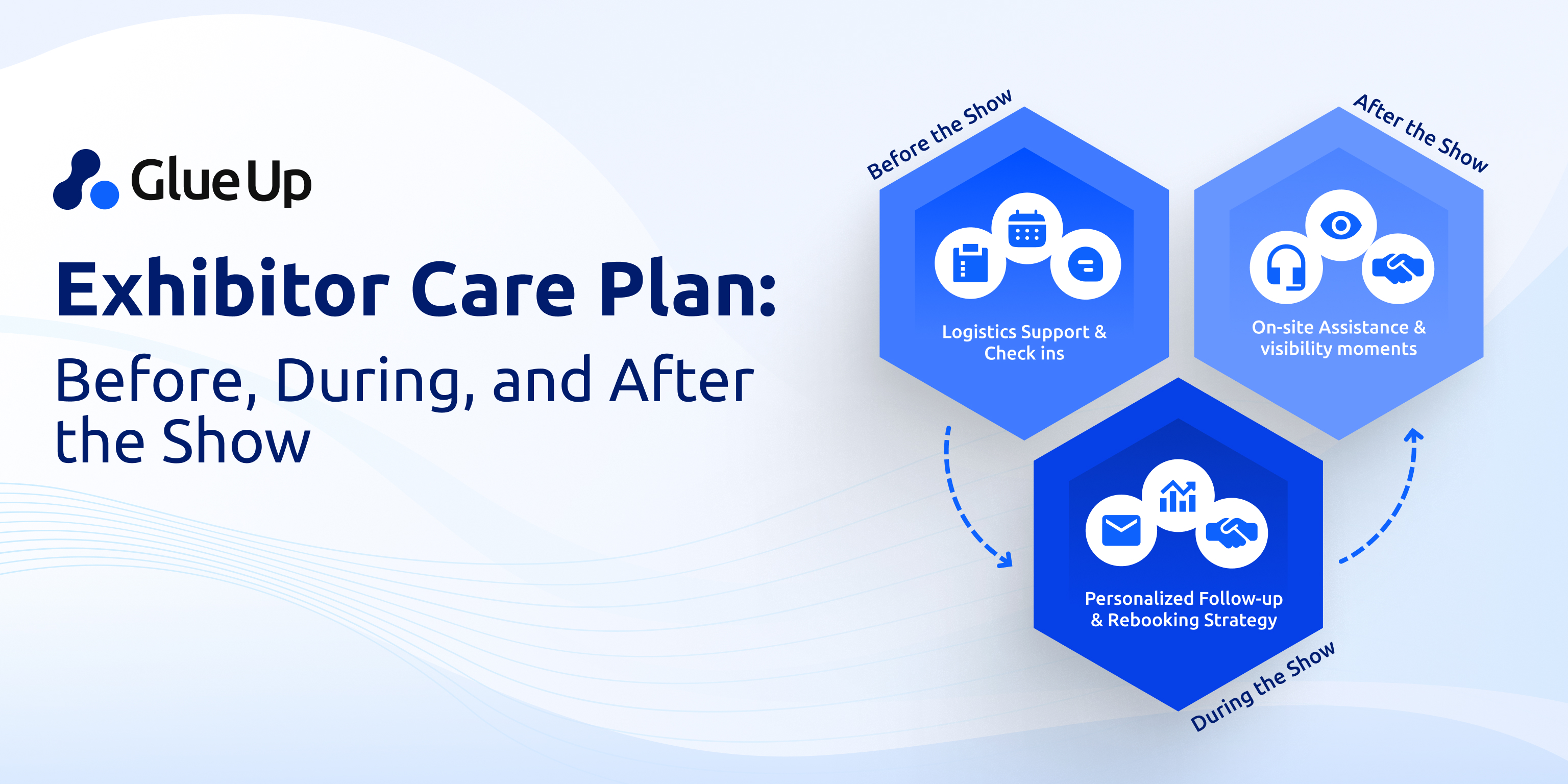
This article reframes the Tradeshow Logistics Exhibitor Plan as an exhibitor care system built across time. It explains how modern associations design continuity before, presence during, and clarity after the show, using structure rather than improvisation. It also shows how Glue Up supports that system with tools that make exhibitor care repeatable, visible, and measurable.
Key Takeaways
In 2026, exhibitors decide whether to return based on how supported, prepared, and confident they felt, not on booth traffic alone. The tradeshow logistics exhibitor plan shapes that experience before the show, during execution, and after results are reviewed, making it a primary driver of exhibitor and sponsor renewal.
Exhibitors rarely talk about workflows or systems. They talk about whether they felt “handled.” Clear timelines, centralized information, visible on-site support, and calm follow-through translate operational structure into trust. That trust becomes the memory exhibitors carry forward.
Research consistently shows that exhibitors who feel prepared engage more confidently and rate events more favorably. A strong tradeshow logistics exhibitor plan reduces cognitive load by aligning information, expectations, and access, allowing exhibitor teams to focus on conversations rather than coordination.
The most influential phase of the tradeshow logistics exhibitor plan begins after the floor clears. Structured post-event summaries, outcome interpretation, and timely follow-up help exhibitors explain value internally. That clarity directly influences renewal confidence for the next fiscal year.
Member-based organizations that outperform peers treat the tradeshow logistics exhibitor plan as an operating discipline that runs year-round. When logistics mature into shared systems, teams gain alignment, leadership gains visibility, and exhibitors experience consistent professionalism across events and cycles.
Quick Reads
Tradeshow Logistics Exhibitor Plan as the First Trust Signal
Every exhibitor forms an opinion about a show weeks before arrival.
That opinion begins when timelines arrive. When documentation feels coherent. When responsibilities feel shared rather than pushed. A strong Tradeshow Logistics Exhibitor Plan establishes trust early by removing ambiguity and replacing it with rhythm.
Academic research on exhibitor satisfaction consistently shows that booth management, organizer clarity, and service reliability shape exhibitor confidence more than promotional promises. Exhibitors interpret organization as competence. They interpret silence as risk.
In 2026, the most effective Tradeshow Logistics Exhibitor Plan treats preparation as care. It recognizes that exhibitors manage multiple events, internal deadlines, shipping constraints, and leadership expectations at once. Clarity becomes a professional courtesy.
Inside Glue Up, this phase comes to life through a Dedicated Exhibitor Resource Portal where all logistics live in one place. Digital exhibitor manuals replace scattered attachments. Automated show logistics timelines surface deadlines before stress builds. Load in and load out maps remain accessible without chasing staff.
This approach changes the exhibitor experience from reactive to composed. The Tradeshow Logistics Exhibitor Plan stops feeling like a checklist and starts feeling like a system exhibitors can trust.
Tradeshow Logistics Exhibitor Plan and the Psychology of Readiness
Readiness shapes performance.
When exhibitors arrive prepared, conversations improve. Booth teams engage with confidence. Messaging feels consistent. The Tradeshow Logistics Exhibitor Plan directly influences this readiness by aligning information, expectations, and access.
Research across trade fair studies highlights a simple truth. Exhibitors who feel prepared rate events more favorably and express higher intent to return. Preparation reduces cognitive load. It allows teams to focus on engagement rather than problem solving.
A modern Tradeshow Logistics Exhibitor Plan supports this through Exhibitor Profile Self Service Management, allowing teams to update assets, contacts, and booth details without bottlenecks. Automated deadline alerts replace last minute reminders. Asset collection workflows bring order to creative materials and signage.
The goal remains simple. When exhibitors arrive, their attention belongs on the floor, not in inboxes.
Glue Up functions as the connective tissue here. It centralizes logistics, communication, and accountability so readiness becomes the default rather than the exception.
Tradeshow Logistics Exhibitor Plan During the Show and Operational Presence
The show floor reveals the true strength of any Tradeshow Logistics Exhibitor Plan.
During the show, exhibitors measure care through response speed, visibility, and coordination. Presence matters more than perfection. When issues surface, exhibitors look for structure that absorbs friction rather than amplifies it.
Operational research in event management shows that exhibitor satisfaction correlates strongly with perceived organizer support during the event. Exhibitors remember how quickly questions were resolved. They remember whether help felt proactive or distant.
A strong Tradeshow Logistics Exhibitor Plan supports real time execution through Automated Check in Task Triggers, ensuring booth teams arrive smoothly and staff visibility remains consistent. Integrated Floor Plan and Booth Management give operations teams immediate context. Exhibitor To Attendee Messaging Tools allow coordination without relying on hallway conversations.
Glue Up enables Real Time Lead Scanning Analytics that support exhibitor engagement tracking without complexity. Exhibitors gain immediate feedback on interactions. Organizers gain visibility into participation patterns across the floor.
During the show, the Tradeshow Logistics Exhibitor Plan becomes a living system. It supports movement, decision making, and calm execution.
Tradeshow Logistics Exhibitor Plan and the Experience of Being Handled
Exhibitors rarely describe their experience using operational language. They rarely talk about workflows, escalation paths, or internal coordination. Yet when exhibitors decide whether a show felt worth repeating, they often describe something simpler and more revealing.
They say they felt handled.
In 2026, that feeling has become one of the clearest signals of exhibitor satisfaction. A strong Tradeshow Logistics Exhibitor Plan creates that experience quietly and consistently, long before an exhibitor evaluates leads or foot traffic.
What “Being Handled” Really Means in Exhibitor Operations
Being handled does not mean constant attention or hand holding. It means orientation without confusion. It means access without friction. It means knowing that someone holds the full picture even when the exhibitor interacts with only one part of the organization.
Operational research in service design and event management shows that perceived support quality matters more than the number of touchpoints. Exhibitors evaluate how quickly issues resolve, how clearly responsibilities are defined, and how consistent responses feel across time and staff.
In practical terms, a mature Tradeshow Logistics Exhibitor Plan ensures that exhibitors always know where to go, who to contact, and what happens next. That clarity lowers stress and preserves confidence on a busy show floor.
Why On-Site Execution Defines Exhibitor Memory
During the show, exhibitor expectations narrow.
They no longer focus on schedules or documentation. They focus on response and coordination. When something shifts, delays, or requires clarification, exhibitors look for visible structure.
Studies on exhibitor satisfaction consistently show that on site service quality strongly influences perceived value and intent to return. Even when outcomes meet expectations, inconsistent support erodes confidence.
A strong Tradeshow Logistics Exhibitor Plan replaces improvisation with shared awareness. It allows staff to respond with context rather than questions. That difference shapes exhibitor trust in real time.
Shared Awareness as an Operational Advantage
The experience of being handled depends on continuity.
Exhibitors interact with multiple staff members across shifts and days. When information resets between those interactions, friction grows. When information carries forward, confidence stabilizes.
Inside Glue Up, real time on site exhibitor assistance logs allow operations teams to track support requests, follow ups, and resolutions centrally. Staff members see what has already happened and what still needs attention. Exhibitors experience alignment rather than repetition.
This shared awareness transforms the Tradeshow Logistics Exhibitor Plan from a set of tasks into a living operational system. It removes dependency on individual memory and replaces it with institutional clarity.
Reducing Friction Through Visible Structure
Friction often shows up in small moments.
An exhibitor asking the same question twice. A follow up promised but delayed. A handoff that loses context.
These moments rarely feel dramatic, yet they accumulate into an overall impression of disorganization. Research on event service quality suggests that these micro experiences shape satisfaction more than large scale features.
A well designed Tradeshow Logistics Exhibitor Plan absorbs these moments through structure. Automated task tracking, centralized communication, and logged resolutions allow teams to act with consistency even under pressure.
Glue Up supports this by keeping exhibitor interactions visible across the organization. That visibility reduces internal guesswork and allows staff to focus on resolution rather than reconstruction.
Professional Care and the Creation of Memory
Exhibitors remember how a show made them feel after the floor clears.
They remember whether issues resolved smoothly. They remember whether support felt calm or reactive. They remember whether the organization seemed in control.
This memory shapes renewal decisions more than any single metric. Academic research on trade fair participation shows that exhibitors form loyalty based on perceived professionalism and reliability as much as on outcomes.
A mature Tradeshow Logistics Exhibitor Plan builds that professionalism into daily operations. It signals competence without announcing it. It allows exhibitors to focus on engagement while trusting that logistics remain under control.
Where Member Based Organizations Differentiate
Member based organizations operate under different expectations than commercial show producers.
Exhibitors often view participation as a partnership rather than a transaction. That lens raises expectations around care, continuity, and accountability.
The Tradeshow Logistics Exhibitor Plan becomes a differentiator here. Organizations that design for exhibitor experience at the operational level stand apart. They create trust through consistency rather than promises.
Glue Up supports this differentiation by enabling organizations to deliver exhibitor care systematically across events, teams, and cycles. The result is not just smoother execution, but stronger exhibitor relationships that carry forward year after year.
Why Being Handled Leads to Being Remembered
Professional care creates professional memory.
Exhibitors who feel handled associate the organization with reliability. That association shapes how they talk about the event internally and how they evaluate future participation.
In 2026, as exhibitor scrutiny increases and budgets demand justification, that memory matters.
A strong Tradeshow Logistics Exhibitor Plan ensures exhibitors leave with more than leads. They leave with confidence. And confidence is what brings them back.
Tradeshow Logistics Exhibitor Plan After the Show and Meaning Making
The most important phase of the Tradeshow Logistics Exhibitor Plan begins after the show.
This is when exhibitors return to leadership conversations. This is when outcomes need articulation. This is when memory either sharpens or fades.
Academic research on pre show and post show marketing consistently shows that follow up shapes long term outcomes more than show activity alone. Exhibitors who receive structured post event summaries perceive higher value and demonstrate stronger renewal intent.
A modern Tradeshow Logistics Exhibitor Plan treats follow up as translation.
Glue Up supports this through Post Event ROI Recap Reporting, bringing leads, meetings, and engagement into a coherent narrative. Automated Post Event Meeting Summaries help exhibitors reconnect context with contacts. Digital Sponsorship Fulfillment Tracking allows teams to verify delivery with confidence.
Native survey tools inside Glue Up gather exhibitor feedback while experiences remain fresh. Responses inform planning for the next year rather than becoming archived data.
The Tradeshow Logistics Exhibitor Plan completes its cycle by turning activity into meaning.
Tradeshow Logistics Exhibitor Plan and Retention In 2026
Retention conversations entered a different phase in 2026.
Boards now approach exhibitor revenue with sharper expectations. Budget reviews focus on continuity rather than one time performance. Exhibitors themselves compare experiences across multiple events, associations, and markets, carrying a growing internal standard for what professional partnership looks like.
Inside that environment, the Tradeshow Logistics Exhibitor Plan carries more weight than many organizations realize. It functions as a quiet retention lever, shaping exhibitor confidence across cycles rather than chasing renewal through persuasion alone.
Why Exhibitor Retention Shifted from Outcomes to Experience
Industry research on trade fairs and B2B events shows a consistent pattern. Exhibitors base renewal decisions less on isolated outcomes and more on perceived reliability, organizational competence, and ease of participation over time.
Leads matter. Visibility matters. Yet consistency matters more.
Exhibitors who experience stable processes, predictable communication, and clear follow through describe events as easier to justify internally. That ease influences how confidently they advocate for returning in the next fiscal year.
A mature Tradeshow Logistics Exhibitor Plan supports this by delivering continuity across planning, execution, and follow up. Each phase reinforces the next, creating a cumulative sense of value.
Retention as a Function of Operational Memory
Retention grows from memory.
Exhibitors remember how planning felt. They remember how smoothly issues resolved. They remember how outcomes were summarized and carried forward. These memories shape renewal conversations long after the show concludes.
Research in relationship marketing and event management suggests that structured post event engagement strengthens retention by helping partners interpret results rather than leaving meaning open ended.
The Tradeshow Logistics Exhibitor Plan addresses this by extending beyond show dates. It creates an operational memory that carries exhibitor context forward year to year.
Timing Renewal When Confidence Is Highest
Renewal conversations succeed when timing aligns with confidence.
After a well executed show, exhibitors experience clarity. They understand what happened. They can articulate value. They feel supported rather than rushed.
Glue Up supports Automated Renewal Prompts For Next Year that align with this window of confidence. Renewal communication connects directly to recent experience, allowing exhibitors to view continuity as a natural next step rather than a fresh decision.
Because exhibitor data lives alongside membership and sponsorship records inside Glue Up, organizations maintain a complete view of the relationship. Past participation, engagement history, and logistical interactions inform future planning.
This continuity strengthens the Tradeshow Logistics Exhibitor Plan as a long-term system rather than a one event process.
Managing Partnerships Across Multiple Cycles
In 2026, many exhibitors participate in several events across regions, chapters, or verticals. They evaluate organizations based on how consistently those experiences unfold.
A strong Tradeshow Logistics Exhibitor Plan provides a stable framework that adapts across formats without losing coherence. Exhibitors encounter familiar processes even as event details change.
For member based organizations, this consistency becomes a differentiator. It signals maturity and professionalism. It reduces exhibitor effort while increasing trust.
Glue Up enables this by centralizing exhibitor records, communication history, and logistical workflows across events. Teams coordinate more effectively. Exhibitors experience continuity regardless of who manages the event.
Retention Built Through Operational Confidence
Predictable exhibitor renewal grows from confidence built over time.
Confidence that deadlines remain clear. Confidence that support stays responsive. Confidence that outcomes receive thoughtful interpretation.
The Tradeshow Logistics Exhibitor Plan shapes this confidence through structure rather than promises. It allows organizations to manage partnerships deliberately across cycles.
In 2026, retention rewards organizations that design exhibitor care as a system. Those systems create relationships that endure beyond a single show and support growth year over year.
Tradeshow Logistics Exhibitor Plan as An Operating Discipline
High performing member-based organizations treat the Tradeshow Logistics Exhibitor Plan as an operating discipline that runs continuously across the year. It lives alongside finance, membership, and governance processes. It shapes how teams plan, execute, review, and improve exhibitor relationships over time.
This discipline recognizes a simple truth. Exhibitor experience stabilizes when operations follow a repeatable rhythm. Care becomes consistent when systems guide behavior.
Research in operations management and service design shows that organizations with shared process visibility and standardized workflows achieve stronger partner satisfaction and higher retention. The same principle applies to events. When logistics follow a clear operational model, outcomes become predictable and trust compounds.
The Four Signals of a Mature Operating Discipline
A mature Tradeshow Logistics Exhibitor Plan expresses itself through four visible signals.
Clear timelines create shared expectations across exhibitors, vendors, and internal teams. Deadlines feel coordinated instead of compressed. Preparation unfolds with confidence.
Centralized access ensures that information remains available when teams need it. Exhibitors spend less time searching. Staff spend less time responding to repeat questions. Knowledge stays current.
Real time visibility gives operations leaders a living view of execution. Support requests, booth readiness, and engagement activity surface early, allowing teams to respond with intention.
Structured follow up closes the loop. Outcomes translate into insight. Feedback informs planning. Each event strengthens the next.
Together, these signals move the Tradeshow Logistics Exhibitor Plan from effort-based execution to system-based delivery.
From Coordination to Operational Clarity
As organizations grow, coordination alone reaches its limits.
Multiple booths, parallel sessions, regional chapters, and rotating staff introduce complexity that personal memory cannot absorb. High performing teams respond by embedding logistics into infrastructure.
Glue Up brings this infrastructure together by connecting exhibitor logistics to CRM records, communication history, and engagement tracking inside a single system. Context travels with the exhibitor across events and cycles. Teams see the full relationship, not a snapshot.
This integration supports clarity at every level. Operations directors gain oversight across multiple booths and chapters. Local teams manage execution confidently within a shared framework. Leadership retains visibility into performance and continuity.
The Tradeshow Logistics Exhibitor Plan becomes reliable because it rests on structure rather than individual effort.
Autonomy with Alignment Across Teams
Member-based organizations thrive when local teams operate with autonomy and shared standards.
A disciplined Tradeshow Logistics Exhibitor Plan supports this balance. Local organizers adapt to venue needs, exhibitor mix, and regional dynamics. Core systems preserve consistency in communication, timelines, and follow up.
Research on decentralized organizations shows that shared operational platforms improve execution quality while preserving local ownership. Events benefit from the same approach.
Glue Up enables this alignment by standardizing exhibitor workflows while allowing flexibility in execution. Teams work within a common rhythm. Exhibitors experience coherence regardless of location or format.
When Logistics Mature into Infrastructure
Infrastructure operates quietly. It supports growth without calling attention to itself.
When the Tradeshow Logistics Exhibitor Plan reaches this level, exhibitors experience ease. Staff experience confidence. Leadership experiences clarity.
Each event reinforces institutional memory. Each cycle strengthens relationships. Each renewal builds on shared history.
For member-based organizations planning beyond 2026, this discipline offers stability. It anchors exhibitor care inside systems that scale with ambition.
The Tradeshow Logistics Exhibitor Plan matures into infrastructure. And infrastructure shapes outcomes long after the show floor clears.
Tradeshow Logistics Exhibitor Plan and the Language of Professionalism
Professionalism rarely announces itself.
It shows up in small, steady signals that accumulate over time. Clear instructions that arrive when expected. Timely updates that anticipate questions. Accurate reporting that aligns activity with outcomes. Calm execution that keeps attention on purpose rather than process.
In 2026, exhibitors read these signals carefully. They use them to assess whether an organization operates with intention or improvisation. The Tradeshow Logistics Exhibitor Plan shapes this language of professionalism through structure rather than messaging.
How Exhibitors Interpret Professionalism in Practice
Research in service quality and organizational behavior shows that partners evaluate professionalism through consistency and reliability more than through tone or presentation. Exhibitors experience professionalism when interactions feel coordinated and predictable across teams and moments.
A well designed Tradeshow Logistics Exhibitor Plan creates that experience by aligning timelines, communication, and follow up. Exhibitors receive information in a sequence that makes sense. Updates reflect awareness of context. Reporting connects effort to meaning.
This alignment reduces uncertainty and reinforces confidence. Exhibitors spend less energy interpreting signals and more energy engaging with attendees.
Consistency as the Foundation of Trust
Trust grows through repetition.
When exhibitors encounter the same level of clarity before, during, and after a show, confidence builds naturally. They begin to expect competence rather than hope for it. That expectation shapes how they talk about the event internally and how they evaluate future participation.
The Tradeshow Logistics Exhibitor Plan supports this consistency by standardizing how information flows and how responsibilities surface. Processes replace guesswork. Systems replace ad hoc coordination.
Trust compounds as exhibitors recognize that care remains stable across cycles.
Professional Signals and Their Impact on Renewal Decisions
Sponsorship and exhibitor renewal decisions increasingly rest on perceived organizational maturity. Exhibitors compare experiences across events, markets, and associations, forming a baseline for what professional partnership feels like.
Studies in B2B relationship management show that partners renew relationships when interactions feel efficient, respectful of time, and aligned with business realities. The Tradeshow Logistics Exhibitor Plan influences all three.
Clear logistics support efficient preparation. Coordinated communication respects exhibitor capacity. Structured reporting aligns participation with internal decision making.
These signals reinforce the value of continuity.
Removing Fragmentation to Strengthen Professionalism
Fragmentation weakens professional signals.
When logistics live in one place, engagement data in another, and outcomes elsewhere, consistency becomes harder to sustain. Exhibitors sense this fragmentation through repeated questions, delayed responses, or disconnected follow up.
Glue Up reinforces professionalism by bringing logistics, engagement, and outcomes together in a single system. Context travels with the exhibitor across planning, execution, and review. Teams act with shared awareness rather than isolated effort.
This integration strengthens the Tradeshow Logistics Exhibitor Plan as a professional framework. It allows organizations to deliver clarity without increasing workload.
Professionalism as a Growth Signal
Professionalism influences reputation beyond individual events.
Exhibitors share experiences with peers. Internal teams compare partnerships. Leadership evaluates organizations based on reliability and ease of collaboration.
A strong Tradeshow Logistics Exhibitor Plan supports growth by signaling operational maturity. It shows that the organization values exhibitor time, effort, and investment.
Over time, these signals shape how the organization is perceived in the market. Professional care becomes part of its identity.
In 2026 and beyond, that identity supports stronger relationships, steadier renewals, and sustained growth built on trust rather than persuasion.
Tradeshow Logistics Exhibitor Plan for The New Fiscal Year
The new fiscal year resets more than budgets.
It resets expectations.
Boards revisit assumptions. Revenue teams examine stability. Operations leaders evaluate whether systems supported the pace of the last cycle or merely survived it. In that context, the Tradeshow Logistics Exhibitor Plan deserves strategic attention because it sits at the intersection of revenue confidence, operational control, and exhibitor trust.
For many member based organizations, exhibitor revenue represents a recurring stream that depends on continuity rather than novelty. The way exhibitors experience preparation, execution, and follow up influences how predictable that revenue becomes across the year.
Why Fiscal Year Planning Elevates Logistics into Strategy
Fiscal year planning forces prioritization.
Leadership teams ask which processes create stability and which introduce variability. They look for areas where consistency can replace effort. The Tradeshow Logistics Exhibitor Plan surfaces naturally in these conversations because it touches every phase of exhibitor engagement.
Research in organizational planning shows that systems influencing partner experience often have an outsized impact on revenue reliability. Exhibitor logistics shape preparation timelines, staff workload, communication clarity, and post event interpretation. Each of these elements affects confidence inside renewal discussions.
When the Tradeshow Logistics Exhibitor Plan operates with structure, organizations enter the fiscal year with clearer expectations and fewer surprises.
Revenue Stability Through Repeatable Execution
Revenue stability grows when experiences repeat with confidence.
Exhibitors who encounter familiar processes across events spend less time recalibrating and more time engaging. That efficiency strengthens their internal case for continued participation.
A mature Tradeshow Logistics Exhibitor Plan supports this by standardizing timelines, documentation, and follow up while allowing flexibility where context requires it. The result is an exhibitor experience that feels reliable rather than rigid.
Glue Up enables this stability by connecting exhibitor logistics to membership and sponsorship records inside a single system. Revenue teams gain visibility into historical participation. Operations teams align execution with past context. Leadership reviews performance with continuity in view.
Operational Confidence as a Leadership Signal
Operational confidence influences how teams plan and executes across the year.
When logistics remain fragmented, planning conversations focus on risk mitigation. When systems align, conversations shift toward optimization and growth.
The Tradeshow Logistics Exhibitor Plan supports this confidence by creating shared visibility across teams. Deadlines remain clear. Responsibilities surface early. Follow up completes the cycle.
Glue Up supports this alignment without introducing new processes for teams to learn. It refines how existing systems work together, reducing friction while increasing clarity.
That refinement matters during fiscal year planning, when capacity feels limited and expectations remain high.
A Shared Language Across Teams
High performing organizations operate with shared language.
When teams describe timelines, readiness, support, and outcomes using the same framework, coordination improves naturally. Misalignment fades. Decisions move faster.
The Tradeshow Logistics Exhibitor Plan becomes that shared language when it functions as a system rather than a document. It gives operations, revenue, and leadership teams a common reference point for planning and review.
Glue Up reinforces this shared language by centralizing logistics, engagement, and reporting. Teams see the same data. Conversations reference the same context. Accountability becomes collective rather than individual.
Planning Forward with Continuity
As organizations move into the new fiscal year, the goal rarely involves dramatic change. Most seek steadier execution, clearer visibility, and stronger relationships.
The Tradeshow Logistics Exhibitor Plan supports all three.
When treated as strategy, it strengthens revenue planning. When treated as infrastructure, it supports daily execution. When treated as language, it aligns teams across the organization.
In that role, the Tradeshow Logistics Exhibitor Plan becomes more than preparation for events. It becomes part of how organizations manage partnerships, plan growth, and carry confidence into the year ahead.
Tradeshow Logistics Exhibitor Plan and The Memory Exhibitors Carry Forward
Exhibitors remember how a show made them feel.
They remember clarity. Support. Follow through.
The Tradeshow Logistics Exhibitor Plan shapes that memory long after banners come down. It builds care into operations and trust into relationships.
For member based organizations entering 2026, this plan offers more than logistics. It offers stability.
And in an environment where certainty matters, that stability becomes value exhibitors recognize and return for.

A tradeshow logistics exhibitor plan is a structured framework that guides how exhibitors are supported before, during, and after a show. It covers preparation timelines, on-site coordination, and post-show follow-up so exhibitors experience clarity, continuity, and measurable value rather than fragmented logistics.
In 2026, exhibitors face tighter budgets and higher internal scrutiny. A tradeshow logistics exhibitor plan helps organizations deliver consistent care and clear outcomes, which directly influences exhibitor confidence, renewal decisions, and long-term event credibility.
Exhibitor retention improves when experiences feel predictable and professional across cycles. A strong tradeshow logistics exhibitor plan creates readiness before the show, visible support during execution, and structured interpretation after the event, making renewals easier to justify internally.
An effective tradeshow logistics exhibitor plan includes clear timelines, centralized exhibitor information, real-time on-site support visibility, and structured post-show follow-up. Together, these elements turn logistics into an operating discipline rather than a one-time task.
Glue Up supports a tradeshow logistics exhibitor plan by centralizing exhibitor logistics, communication history, engagement tracking, and post-show reporting in one system. This allows teams to manage exhibitor care consistently across events while maintaining visibility and continuity year over year.
Organizations benefit most when the tradeshow logistics exhibitor plan is developed during fiscal year planning. Early alignment helps teams coordinate execution, improve exhibitor readiness, and strengthen retention across the full event calendar.
Yes. For associations managing multiple events or chapters, a tradeshow logistics exhibitor plan creates shared standards while allowing local flexibility. Exhibitors experience consistent professionalism across locations, which strengthens trust and long-term relationships.