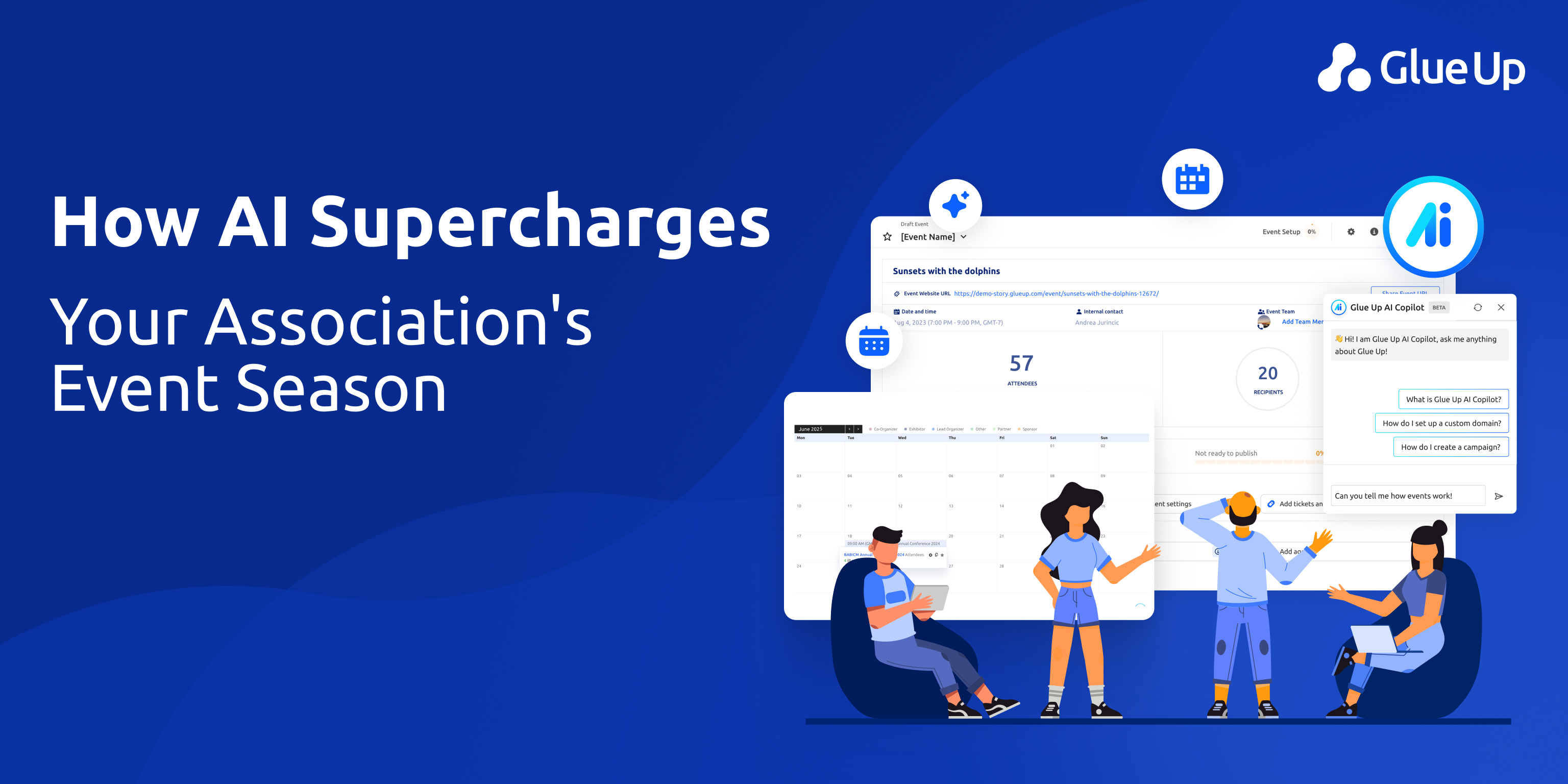
AI event improvement has quietly become the organizing force behind how modern associations approach event season. Planning calendars once filled with isolated conferences and meetings now feel continuous, connected, and heavier with expectation. Boards expect clearer outcomes. Members expect relevance. Teams expect systems that carry more of the load. AI event improvement sits at the center of this shift because it changes how events are designed, communicated, and sustained across an entire year, rather than optimized one date at a time.
For member-based organizations entering the next fiscal year, AI event improvement no longer feels experimental. It feels structural. Event season behaves like a living system where registrations influence participation, participation shapes retention, and retention defines financial confidence. AI event improvement works because it respects this reality and helps associations manage complexity with calm and clarity.
Key Takeaways
Modern associations no longer run events in isolation. AI event improvement allows teams to see how registrations, engagement, and follow ups connect across the entire year, creating momentum that builds rather than resets with each event.
AI for improving event registrations shapes relevance before an event begins. Personalized outreach, adaptive workflows, and historically informed messaging lead to more consistent attendance and better participation planning throughout the season.
AI event improvement makes participation feel personal without increasing manual effort. By using historical engagement patterns, associations create experiences that deepen connection, support how AI improves event attendee retention, and keep members involved across multiple programs.
AI event improvement absorbs repetitive coordination work, giving teams time and space to focus on strategy and experience design. When internal workflows stay connected, communication improves, alignment strengthens, and confidence extends to attendees and sponsors.
In 2026, leadership expects clarity around participation, retention, and revenue confidence. AI event improvement replaces fragmented reporting with coherent narratives that show how event season supports long-term member value and organizational readiness.
Quick Reads
AI Event Improvement Changes How Event Season Behaves
Event season once lived as a collection of milestones. A spring conference. A summer workshop. A fall annual meeting. Each event carried its own workflow, its own spreadsheet, its own set of follow ups. That model matched a slower pace of expectation.
Today, event season behaves differently. Members move across programs. Sponsors track continuity. Leadership asks how participation compounds year over year. AI event improvement supports this shift by helping associations view events as connected moments rather than separate transactions.
AI event improvement allows teams to see patterns across the season. Attendance history informs outreach. Engagement data shapes programming decisions. Communication flows remain consistent even as formats change. Instead of rebuilding momentum each time, associations maintain it.
This reframing matters because event season now carries strategic weight. Participation across events influences renewal confidence. Engagement signals feed board conversations. AI event improvement becomes the infrastructure that keeps these signals visible and usable.
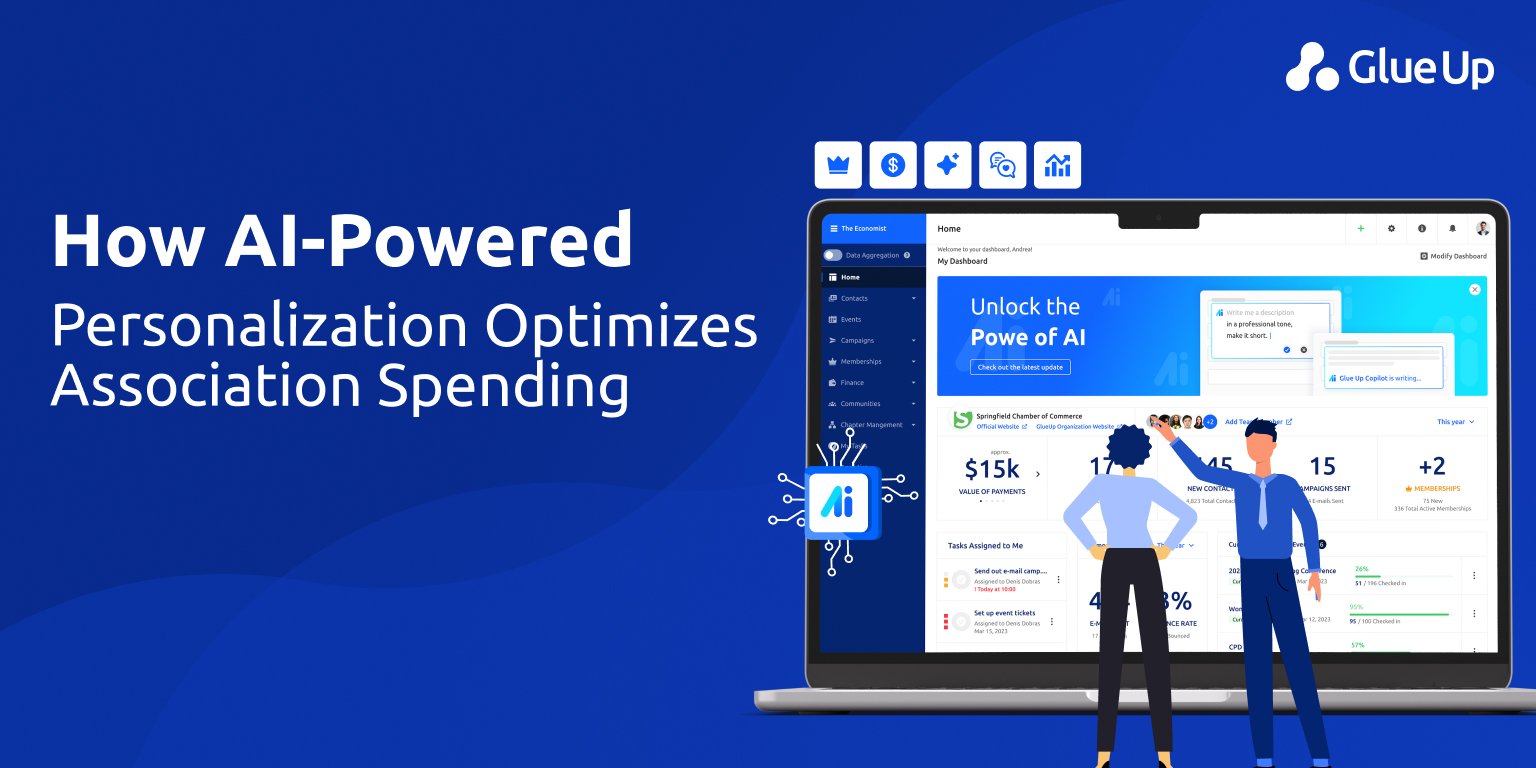
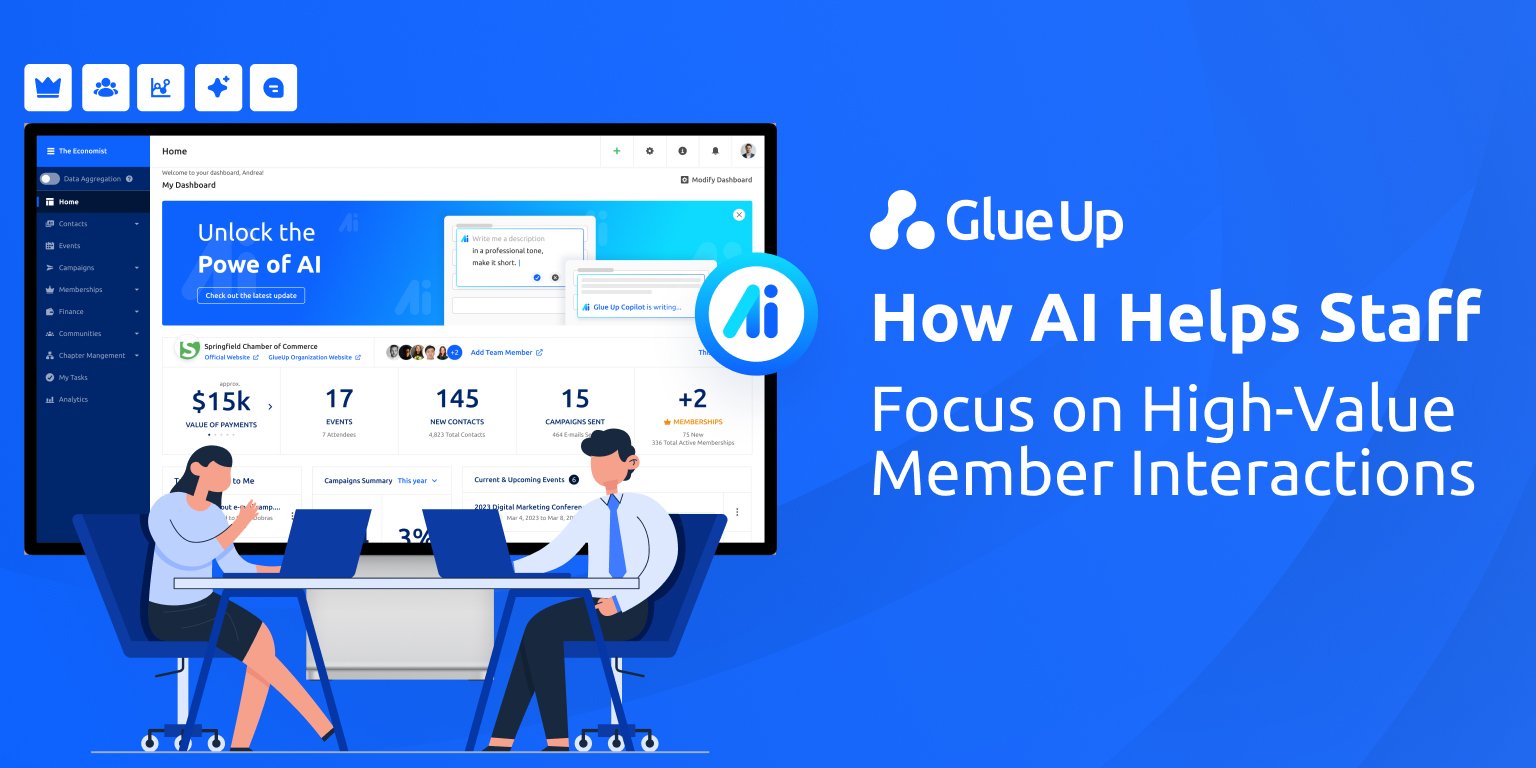
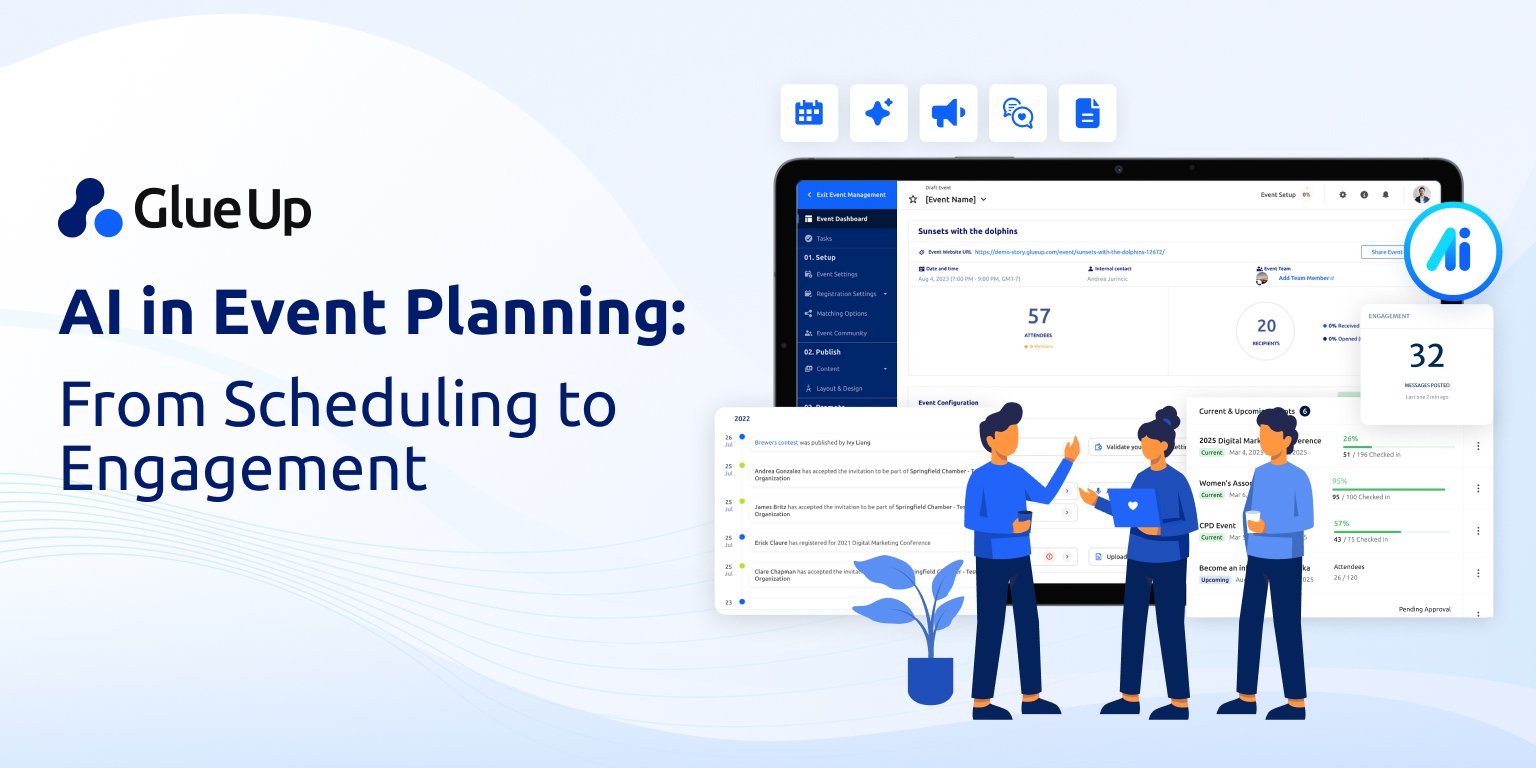
This is where platforms like Glue Up matter. When registrations, communications, engagement data, and follow ups live in one environment, AI event improvement becomes practical rather than theoretical. Teams gain continuity without adding complexity.
AI Event Improvement Starts with Smarter Event Registrations
AI for improving event registrations represents one of the most tangible expressions of AI event improvement. Registration sits at the intersection of intent and participation. When that experience feels relevant and intuitive, participation quality improves before the event opens.
Traditional registration processes treat all audiences the same. Forms remain static. Outreach feels generic. AI event improvement introduces responsiveness into this moment. Registration experiences adapt based on who the member is, how they engaged before, and what they tend to value.
AI assisted workflows help associations identify which messaging resonates with returning attendees, which timing improves response, and which pathways encourage earlier commitment. Instead of pushing reminders harder, teams shape registration experiences that feel familiar and respectful.
AI for improving event registrations also reduces friction for staff. Manual segmentation disappears. Outreach schedules adjust automatically. Teams focus on crafting value rather than managing lists.
Across a full event season, these gains compound. Higher quality registrations lead to stronger attendance consistency. Consistency leads to better participation planning. Planning feeds confidence across departments.
AI Event Improvement Makes Participation Feel Personal At Scale
Participation thrives when relevance feels personal. Members attend events because they see themselves reflected in the agenda, the conversations, and the people in the room. AI event improvement enables this level of personalization across large audiences.
AI event improvement uses historical engagement patterns to inform session recommendations, networking opportunities, and follow up content. Attendees receive guidance that aligns with their interests and roles without requiring manual curation.
This approach supports how AI improves event attendee retention. Members who experience relevance during events remain more connected after them. Engagement does not end at session close. It continues through conversations, resources, and future invitations.
AI event improvement also helps associations understand participation quality. Engagement scoring offers insight into how attendees interact rather than relying solely on headcounts. Teams see which formats spark conversation, which sessions sustain attention, and which follow ups encourage continued involvement.
These insights shape future programming choices. Event season evolves based on evidence rather than assumption. Members feel understood. Teams feel prepared.
AI Event Improvement Supports Teams Before It Serves Attendees
Event season places real pressure on association teams. Planning cycles overlap. Communication timelines compress. Administrative tasks multiply. AI event improvement delivers value by absorbing repetitive coordination and freeing teams to focus on outcomes.
AI assisted systems handle scheduling, confirmations, content drafts, and routine inquiries. Teams regain time for strategic decisions. Creative planning replaces reactive troubleshooting.
This operational relief strengthens event quality indirectly. When teams feel supported, they design experiences with intention. Energy shifts from task completion to experience curation.
AI event improvement also improves internal alignment. Marketing, membership, and events teams work from shared data. Conversations move faster. Decisions feel grounded. Leadership gains clearer visibility into progress across the season.
This internal clarity translates externally. Attendees experience smoother communication. Sponsors see consistent follow through. Confidence builds organically.
AI Event Improvement Extends Participation Beyond Event Day
AI to improve event participation reaches its full potential after the event concludes. Post event communication shapes how value carries forward. AI event improvement transforms follow ups from generic recaps into meaningful continuations.
AI assisted workflows tailor post event messages based on engagement. Attendees receive content aligned with sessions they attended. Networking connections receive prompts that encourage ongoing dialogue. Sponsors gain insight into engagement outcomes.
This approach supports how AI improves event attendee retention across cycles. Members feel seen beyond attendance. Engagement feels continuous rather than episodic.
Event season becomes a rhythm rather than a reset. Each program feeds the next. Participation evolves naturally.
AI Event Improvement Shapes Board Confidence In 2026
Entering 2026, boards expect clarity in a way that feels sharper than before. Event season no longer sits in a side conversation about programming success or attendance volume. It shows up in budget reviews, renewal forecasts, and strategic planning sessions. Directors want to understand how event investments connect to participation, retention, and revenue confidence across the full fiscal year. AI event improvement supports this expectation because it replaces fragmented reporting with coherence.
Historically, event reporting leaned on snapshots. One slide for registrations. One for attendance. One for satisfaction surveys. Each metric told a partial story, but none explained momentum. Boards listened politely, then asked the same follow up question every year. What did this actually change for the organization.
AI event improvement changes that dynamic by allowing teams to show patterns instead of moments. Participation data no longer lives in isolation. It connects across events, chapters, formats, and time. Engagement signals reveal how members move through programs rather than how many showed up once. Renewal behavior begins to align naturally with participation history. For the first time, boards see continuity instead of coincidence.
This shift matters because boards think in systems. They evaluate risk, sustainability, and return over time. AI event improvement speaks their language by turning event season into a narrative that unfolds logically. Teams can show how early registrations influence mid season engagement, how engagement supports retention, and how retention stabilizes revenue planning. The story becomes cumulative rather than defensive.
AI event improvement also changes the tone of board conversations. Instead of justifying why events deserve investment, teams explain how events function as infrastructure for member value. Discussions move away from explaining variances and toward shaping direction. Leadership begins asking better questions. Which programs deepen long term participation. Where does engagement plateau. How does event season support growth goals next year.
Transparency plays a critical role here. AI event improvement surfaces information consistently, not selectively. When data flows from one system rather than several disconnected tools, confidence grows. Boards trust what they see because the story remains stable across reports, months, and meetings. Confidence follows visibility.
This level of clarity signals organizational maturity. Associations that adopt AI event improvement demonstrate discipline in how they manage member relationships. They show stewardship rather than improvisation. Event season stops feeling reactive and starts feeling intentional.
Platforms like Glue Up support this maturity by connecting event activity, engagement history, and membership data inside a single operating environment. AI assisted insights help teams frame conversations around progress rather than performance alone.
As 2026 approaches, board confidence increasingly reflects how well organizations explain themselves. AI event improvement gives associations the structure to do exactly that. It allows leadership to see where the organization stands, where it is heading, and why event season remains one of its strongest strategic assets.
AI Event Improvement as an Operating Philosophy
AI event improvement succeeds because it aligns with how associations already think about relationships. Members value continuity. Teams value clarity. Leadership values confidence. AI event improvement supports these priorities through structure rather than disruption.
The most effective associations approach AI event improvement as an operating philosophy. They integrate AI across registrations, communications, participation tracking, and follow ups. Event season becomes easier to manage because systems work together.
Glue Up supports this philosophy by connecting the full event lifecycle inside one platform. AI assisted tools enhance decisions grounded in historical data. Teams maintain control while gaining efficiency.
AI Event Improvement and the Future of Event Season
Event season will continue to evolve. Expectations will rise. Resources will remain finite. AI event improvement offers a path forward grounded in respect for people and process.
Associations that embrace AI event improvement gain the ability to plan with intention. They support teams through complexity. They serve members with relevance. They enter each new fiscal year with confidence built on understanding rather than guesswork.
AI event improvement does not replace human judgment. It amplifies it. It brings calm to busy seasons. It allows associations to focus on what matters most: meaningful participation sustained over time.
For organizations preparing for 2026, AI event improvement represents readiness. Readiness to manage event season as a system. Readiness to support teams and members together. Readiness to lead with clarity in a crowded landscape.
That readiness defines the next era of association events.

AI event improvement refers to using AI-supported systems to improve how associations plan, manage, and sustain event season. It connects registrations, participation, engagement, and follow ups across the year, helping teams manage events as a system rather than isolated programs.
AI for improving event registrations helps associations tailor outreach, timing, and registration experiences based on historical engagement. This leads to higher quality sign ups, better attendance consistency, and less manual work for staff.
AI improves event attendee retention by keeping engagement visible beyond event day. When post event communication, content, and invitations reflect how members actually participated, involvement feels continuous rather than episodic.
AI to improve event participation works by guiding attendees toward relevant sessions, connections, and follow ups. Participation increases when experiences feel aligned with member interests across multiple events.
In 2026, boards expect clearer explanations of how events support participation, retention, and revenue confidence. AI event improvement replaces fragmented reports with patterns that show how event season contributes to long term member value.
AI event improvement supports human judgment rather than replacing it. Teams still decide strategy and priorities, while AI helps surface context, continuity, and engagement signals that inform better decisions.
Glue Up supports AI event improvement by connecting event activity, engagement history, and membership data in one system. This structure helps associations manage event season with clarity, consistency, and confidence.