Event profitability isn't accidental. It's engineered with precision, with actionable data backing every ticket price, sponsorship package, and engagement campaign. For associations, a strong event revenue strategy is no longer about filling seats; it's about designing financial predictability through analytics.
Data gives you control. It identifies what converts, what underperforms, and what drives consistent margins across your annual event portfolio.
In this article, we'll outline how data transforms event monetization into a repeatable, scalable system. You'll see how to model revenue, forecast performance, and use platforms like Glue Up's event management software for associations to make every decision measurable.
Key Takeaways
- Data is a financial discipline, not a marketing tool. Treat analytics as the backbone of every pricing, sponsorship, and conversion decision.
- Predictive forecasting replaces reactive reporting, improving margins across your event portfolio.
- Glue Up's analytics ecosystem unifies event, finance, and CRM data, giving leadership teams complete revenue visibility.
- Real-time insights allow for proactive adjustments that keep event ROI aligned with board-level expectations.
- The long-term value of a data-driven event model lies in its repeatability and precision.
Why Data Defines the New Economics of Event Revenue
Revenue volatility is often a data problem. Without granular insights, pricing, sponsorship, and audience strategy rely on assumptions that collapse under scrutiny. To stabilize your event margins, treat data as infrastructure, not an afterthought.
Here's how data becomes the operational core of modern event strategy:
Precision Over Prediction
When event teams depend on historical averages, they overprice slow segments and underprice high-demand tiers. Data analytics eliminates guesswork. By analyzing conversion velocity, time-to-purchase, and discount responsiveness, you can calibrate pricing dynamically and optimize revenue yield without eroding participation.
Sponsor ROI as a Quantifiable Metric
Sponsors no longer invest in exposure; they invest in performance. With analytics, you can demonstrate deliverables, such as qualified leads, engagement time, and click-through value. This transparency justifies premium pricing and enables data-backed renewals rather than annual renegotiations.
Real-Time Financial Feedback Loops
Traditional financial reviews happen post-event, when the opportunity to pivot has passed. Data platforms now provide continuous visibility into revenue flow, allowing leadership teams to reallocate marketing budgets or open late-stage ticket offers before financial outcomes are locked in.
When you treat event data as a strategic asset, every campaign, sponsor conversation, and pricing decision aligns with measurable ROI. Below are the levers that deliver the highest impact.
The Revenue Levers Data Helps You Optimize
Each event contains hundreds of financial variables, such as pricing structures, conversion points, and sponsor activations. With data, you can simplify this complexity into clear, controllable inputs. Check out the four key areas where associations are gaining measurable revenue lift.
Ticket Pricing and Demand Forecasting
Advanced analytics transform pricing from static to adaptive. Predictive models reveal when and why members buy, allowing you to adjust pricing windows and discount timing for maximum yield. Instead of generic early-bird campaigns, you can model demand curves by segment, ensuring price tiers align with behavioral data, not tradition.
Sponsorship Performance and Valuation
Sponsors respond to evidence. Using engagement analytics data—page views, banner impressions, and session participation—you can quantify exposure per package. This lets you price with confidence and show boards how sponsorship ROI contributes to total event profitability.
Audience Segmentation and Upselling
Every dataset is an opportunity for personalization. Behavioral segmentation enables tailored outreach and cross-sell initiatives such as premium seating, VIP access, or digital add-ons. The result is higher per-attendee value and a richer audience experience.
Post-Event Analytics for Continuous Revenue Growth
Data doesn't expire after closing remarks. Post-event analysis reveals which formats, speakers, or sessions generated the strongest ROI. Those insights guide future programming, sponsor tiers, and pricing models, turning your past performance into next year's strategy.
Event monetization stops being reactive when data is integrated into daily decision-making. The following section shows how Glue Up operationalizes that intelligence at scale.
How Glue Up Converts Event Data Into Revenue Intelligence
Glue Up's Event Management Module transforms event operations into a measurable financial strategy. Every registration, sponsorship, and payment flows through a connected system that automatically updates your financial, CRM, and analytics dashboards. The result is complete visibility into event performance without data gaps, manual imports, or guesswork.
Here's how each component translates event data into predictable revenue outcomes.
Track Every Transaction in One Place
Within Glue Up, event revenue connects directly to the Finance Module, capturing every transaction—from ticket sales and discounts to sponsorship invoices and refunds—in real time. This eliminates reconciliation errors and provides instant clarity on cash flow, margins, and outstanding payments. Finance teams can generate reports by event, category, or fiscal period with a few clicks.
Use Real-Time Dashboards to Measure Revenue Performance
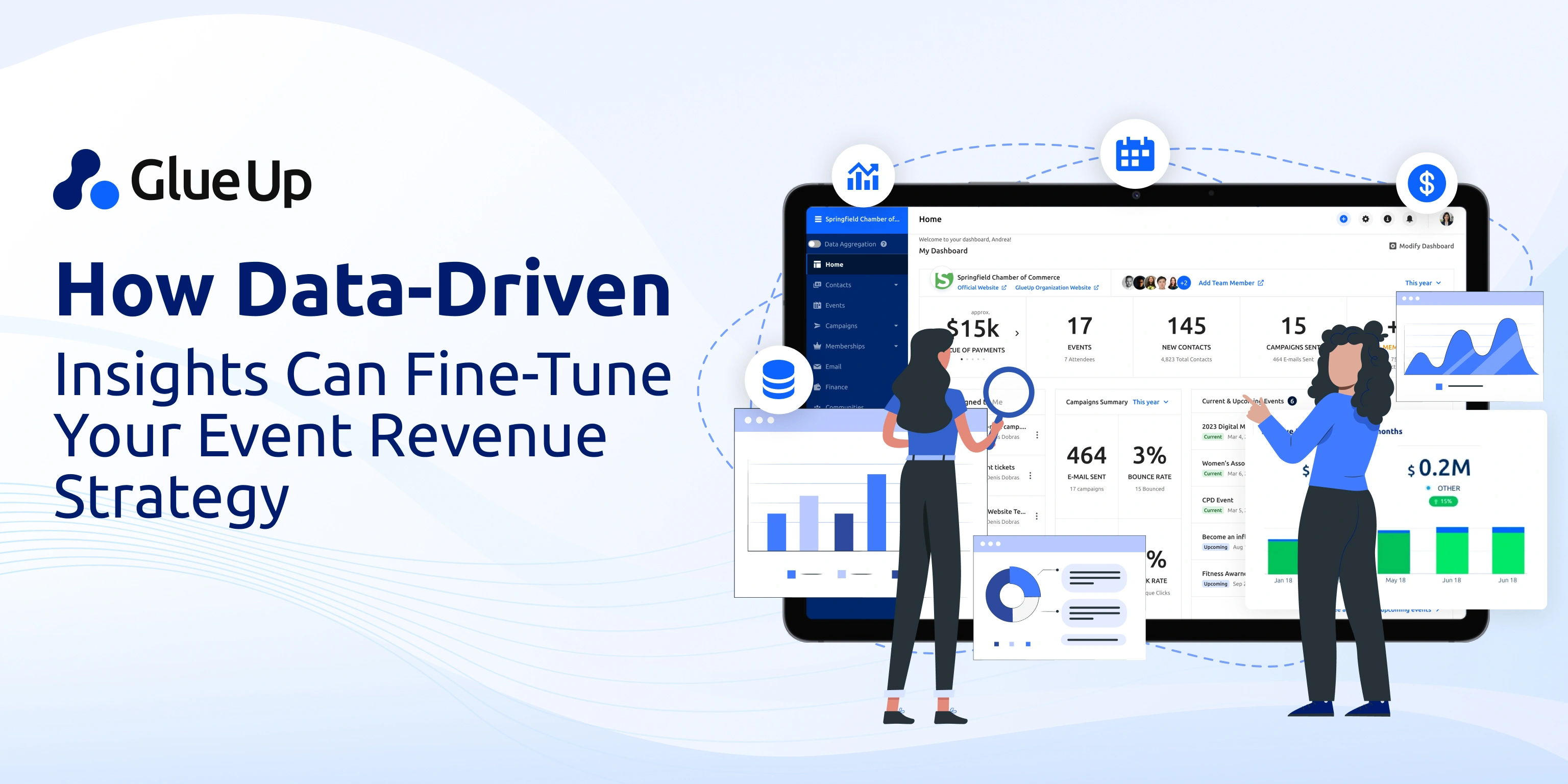
Glue Up's Reporting Module gives event and finance leaders an operational view of revenue performance as it happens. Dashboards display total ticket income, sponsorship value, attendance ratios, and cost breakdowns. So, you can compare actual results to budget forecasts and make in-flight adjustments to meet financial targets before the event closes.
Improve Forecasting Accuracy with Centralized Insights
Because Glue Up integrates event, membership, and finance data, you can analyze how attendance, engagement, and sponsorship activity affect recurring revenue. These insights strengthen financial forecasting and make budget planning for future events more accurate. By observing trends, such as which events attract premium sponsors or generate higher renewals, your team can allocate resources where ROI is most predictable.
Manage Sponsorships and Deliverables Efficiently
Inside the Event Module, sponsorship packages are tied to deliverables like branded sessions, receptions, or digital listings. Teams can track fulfillment in real time, record completed assets, and document sponsor visibility metrics for reporting. When linked with the Finance Module, invoices and payment statuses update automatically, ensuring sponsorship revenue stays accurate and traceable.
Analyze Event Outcomes for Long-Term Growth
After each event, Glue Up consolidates registration data, financial results, and engagement reports into a single post-event summary. These analytics highlight what generated the strongest ROI, whether it was pricing strategy, timing, or program mix. Associations can apply these learnings to future planning, ensuring each new event builds on verified financial insights rather than assumptions.
Build a Predictable, Data-Led Event Model Today
Every association wants predictable revenue. The only way to achieve it is through consistent, data-backed feedback loops. Below are three steps to institutionalize data-driven decision-making across your event lifecycle.
- Pre-Event Modeling: Use historical and real-time data to forecast ticket yield, set pricing tiers, and model sponsor ROI.
- In-Event Optimization: Monitor engagement and conversion metrics daily to pivot offers and maximize last-mile sales.
- Post-Event Refinement: Translate outcomes into insights that inform budget planning, sponsorship packages, and pricing for the next cycle.
Associations that operationalize this loop see compounding returns: higher margins, more loyal sponsors, and a more predictable cash flow across fiscal periods. Book a demo with Glue Up today to see how you can turn event data into a precision-built revenue system that grows margins, strengthens forecasting, and improves every future event.
Frequently Asked Questions
What makes an event revenue strategy data-driven?
It's driven by continuous analytics, using behavioral and financial data to guide real-time decisions on pricing, sponsorship, and engagement.
How can predictive analytics increase event revenue?
Predictive models identify sales patterns, pricing elasticity, and high-value segments, so you can adjust offers to maximize conversion.
How does Glue Up connect event data with financial reporting?
Glue Up integrates event transactions, invoices, and sponsorship data into unified dashboards for finance and leadership visibility.
What are the most critical KPIs for event revenue optimization?
Ticket yield, conversion rate, sponsor ROI, gross margin per event, and attendee lifetime value.
How do post-event insights influence long-term profitability?
Post-event analytics reveal which variables drive success—helping you fine-tune pricing, programming, and partner strategy for sustained growth.
Quick Reads
- How to Build a Revenue Engine with Association Management Software
- Add-On Cart for Member Retention & Growth
- Simplify Multi-Currency Payment Posting for Community Chapters With Glue Up + Paygage
- AI Automation for Event Registration & Beyond
- Integrating AI into CRM for Membership Growth
- How to Build a Chapter Event Calendar
- What Is All-In-One Association Software?
- AI-Powered Member Check-In Software