
Financial data transparency member-based organizations has moved far beyond compliance. It’s now a reputation strategy and a structural marker of organizational maturity. Today, executives who treat financial clarity as a competitive asset outperform those who rely on retrospective reporting. According to Science Direct, organizations that institutionalize transparent financial practices experience higher trust velocity, stronger stakeholder alignment, and improved long-term performance.
Now think about this in the context of associations. Your members evaluate value through a governance lens as much as a programmatic one. When they see fragmented ledgers, inconsistent reporting, manual reconciliation errors, and opaque decision structures, they start questioning fiduciary stewardship. However, when you introduce financial transparency, you eliminate interpretive noise, reinforce institutional integrity, and elevate your association above competitors who still operate with reactive, spreadsheet-driven workflows.
In this post, you’ll learn how transparency becomes a differentiation strategy, how automation strengthens operational discipline, and how Glue Up’s financial management software and native integrations support real-time clarity.
For a quick overview of our AI-powered AMS, book a quick demo today!
Key Takeaways
- Financial data transparency is a competitive positioning strategy that signals governance quality and operational maturity.
- Automated invoicing and automated financial reporting reduce manual errors, shorten audit cycles, and give executives real-time visibility into performance.
- Transparent reporting on dues, events, and non-dues revenue strengthens member trust and improves renewal and sponsorship negotiations.
- Integrated systems that connect membership, finance, and events make association management system reporting more accurate and easier to explain to non-financial stakeholders.
- CFOs and executive teams that institutionalize transparency create faster decision cycles, clearer accountability, and more credible long-term financial strategies.
Why Financial Transparency Has Become a Competitive Asset
Financial transparency is no longer a hygiene factor. It functions as a strategic differentiator in markets where members compare governance standards as much as program benefits. When your reporting is structured, timely, and intelligible to non-finance leaders, you signal institutional maturity in a way that generic “mission” language never can. Here’s how:
Transparency as a Signal of Governance Quality
Members, sponsors, and regulators use your financial practices as a proxy for overall governance quality. Clear reporting on reserves, revenue composition, and cost structure shows that leadership understands risk, not just programming.
Differentiation in a Crowded Membership Market
Most associations talk about impact, advocacy, and value. Very few can articulate how dollars flow from dues and sponsorships into outcomes with the same precision they use for their strategic plan. By elevating financial transparency into your value proposition, you separate your association from peers that still treat financials as a back-of-the-report appendix.
Stronger Positioning With Sponsors and External Stakeholders
Sponsors and institutional partners evaluate you through a capital allocation lens. When you can show how funds are allocated, which programs generate sustainable margin, and how reserves are managed, you reduce perceived risk. That clarity improves your negotiating position and makes it easier to justify multi-year commitments and premium sponsor packages.
Internal Alignment Across Board, Finance, and Staff
Transparent financials simplify internal decision making. When boards, finance teams, and executives share the same structured view of revenue, costs, and performance, conversations shift from “What do the numbers say?” to “What do we want to optimize?” Resources like Growth Force’s report on transparency cultures in financial reporting show that clear information flows reduce political friction and increase strategic focus.
How Transparency Improves Organizational Decision Making
Financial clarity is ultimately a decision-support system. You operate in an environment where you’re balancing non-dues revenue reliability, reserve adequacy, program costs, chapter remittances, and multi-year commitments. When reports are manually generated or inconsistently structured, executives lose analytical fidelity.
Associations with disciplined transparency frameworks manage:
- Revenue Concentration Risk: Shows how dependent you are on one major income source, like a single sponsor, one big event, or dues alone.
- Liquidity Horizons: Tells you how long the organization can comfortably operate using available cash.
- Cost Efficiency Ratios: Compares what you spend to what you get back in results. This helps executives see which programs deliver real value and which ones quietly drain the budget without a strong return.
- Program Margin Contribution: Shows which programs actually generate surplus and which require subsidy.
- Member Value Per Dollar Deployed: Connects financial spending directly to member outcomes. Leaders can see whether money is improving engagement, retention, or participation, instead of guessing based on sentiment.
- Audit Readiness Cycles: Reflects how quickly and cleanly your records can withstand formal review. When this stays strong, boards gain confidence, external scrutiny becomes less stressful, and leadership avoids last-minute financial fire drills.
A transparent ecosystem allows you to model tradeoffs, defend budget variance, and align your board around a shared understanding of fiscal priorities. Without transparency, financial conversations degrade into opinion exchanges instead of governance-oriented decisions.
How Glue Up Supports Financial Data Transparency
Glue Up’s all-in-one association management software reinforce transparency through simplification, centralization, and accuracy with a dedicated finance module. There’s no overstating or overselling. The platform gives you the essential infrastructure required for transparent accounting in a membership ecosystem.
Centralized Invoicing and Payments
Automated invoicing reduces manual errors and gives members accurate, consistent statements. This improves financial visibility and strengthens trust across chapters and national structures.
Real-Time Reporting
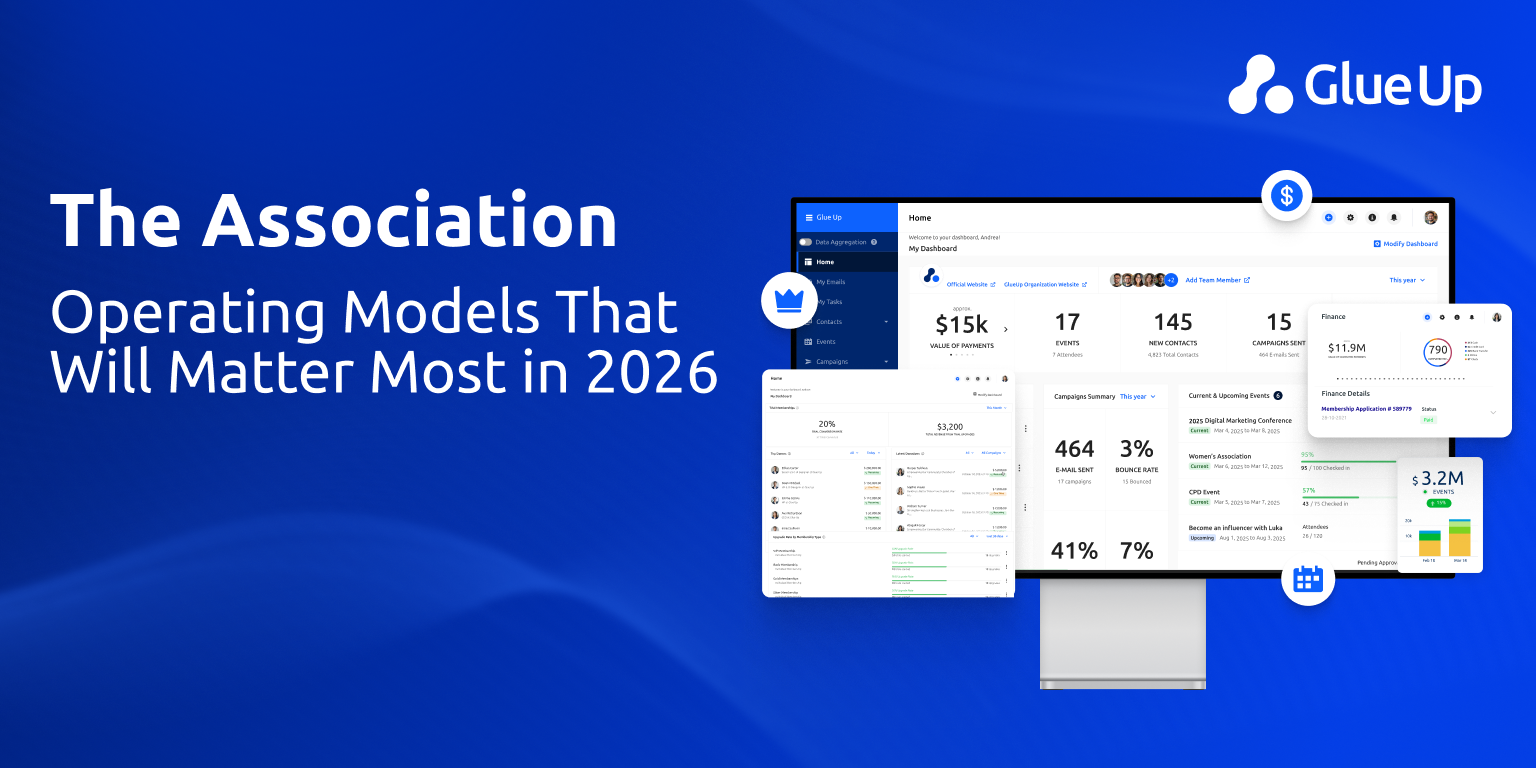
Dashboards consolidate revenue, outstanding dues, event income, expense categories, and member transactions. Executives make decisions based on immediate data, not end-of-month reconciliations.
Integrated Accounting Workflows
Glue Up synchronizes with leading accounting platforms like QuickBooks, Xero, and Sage Intacct. This maintains ledger accuracy while reducing administrative burden.
Audit Support and Governance Readiness
Automated trails help finance teams prepare documentation more efficiently. When auditors arrive, your data is structured, consistent, and accessible.
Member-Facing Transparency Tools
Members receive accurate invoices, payment histories, and renewal documentation. Transparency isn’t only internal. It’s delivered directly to the individuals who rely on it for confidence.
To summarize, Glue Up transforms financial clarity from a manual reporting obligation into a continuous operational standard.
Transparency Is How You Compete for the Future
Financial transparency isn’t a reporting activity. It’s a strategic posture. Associations that operationalize financial data transparency strengthen trust, reduce governance friction, and accelerate decision velocity across the entire institution. Automation gives you a transparency engine that reinforces member confidence and positions you for sustainable growth.
So, if you want to see how Glue Up can help you institutionalize transparency through automation and centralized reporting, book a demo right away!
Quick Reads
- How to Build a Revenue Engine with Association Management Software
- Add-On Cart for Member Retention & Growth
- Simplify Multi-Currency Payment Posting for Community Chapters With Glue Up + Paygage
- AI Automation for Event Registration & Beyond
- Integrating AI into CRM for Membership Growth
- How to Build a Chapter Event Calendar
- What Is All-In-One Association Software?
- AI-Powered Member Check-In Software

It strengthens trust, improves decision efficiency, and signals operational integrity to members, sponsors, and auditors.
Budgets, audited financial statements, dues allocation summaries, and program performance indicators.
Through automated reporting, centralized revenue systems, audit trails, and real-time financial dashboards.