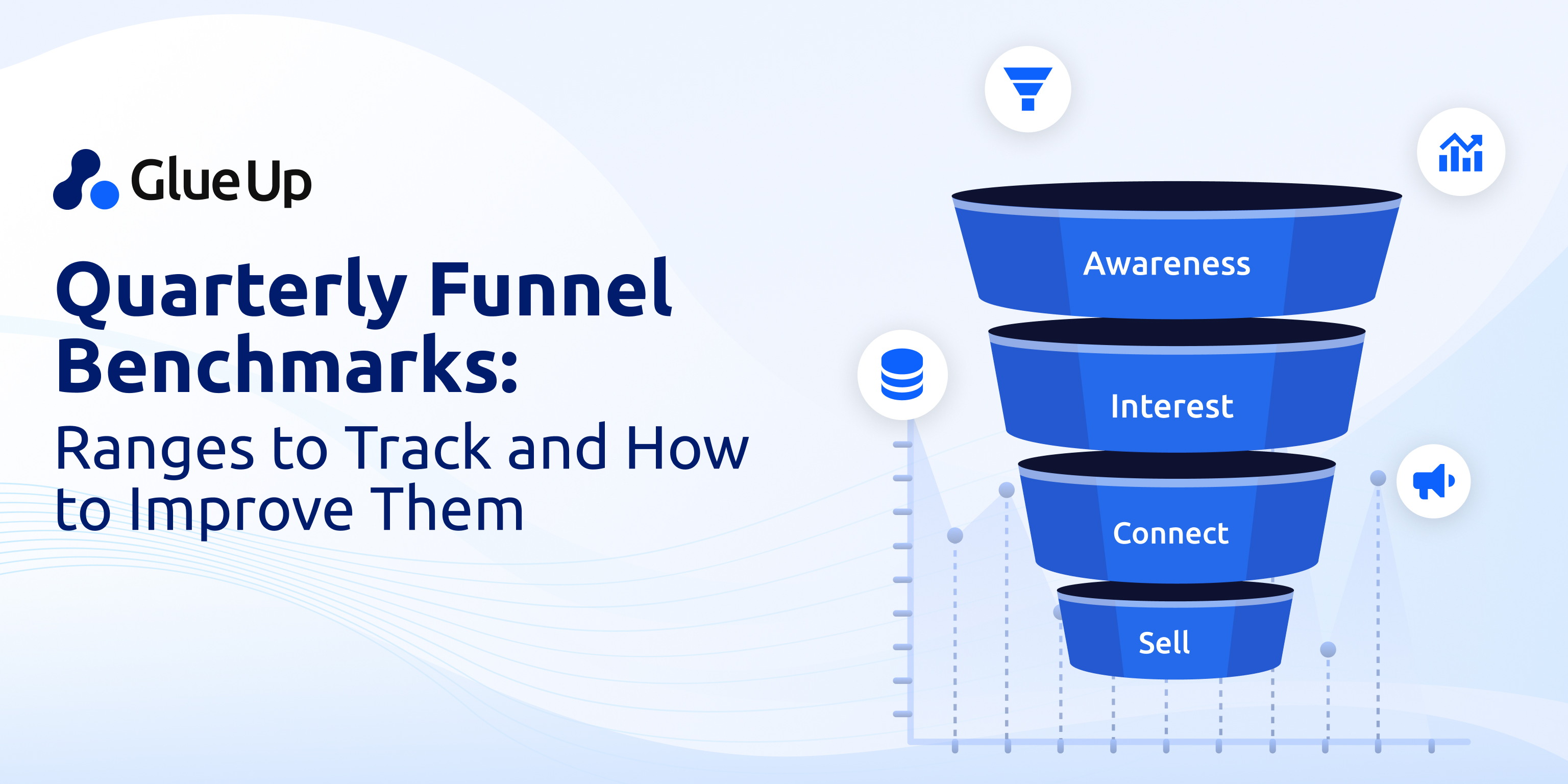
Sales funnel conversion rate benchmarks shape the first question every leadership team carries into the new fiscal year: are we converting well enough to grow with confidence.
Budgets feel tighter. Boards ask sharper questions. Membership teams feel the pressure to show progress that stands up to scrutiny. In that environment, sales funnel conversion rate benchmarks move from background metrics into practical decision tools leaders rely on.
Sales funnel conversion rate benchmarks clarify how prospects progress from first interaction to committed membership, sponsorship, or partnership. In 2026, that clarity influences planning conversations far more than pipeline size or activity volume alone.
This guide explains how high performing member organizations use sales funnel conversion rate benchmarks quarter by quarter and stage by stage, translating historical funnel data into steady growth through systems built for clarity, accountability, and rhythm.
Key Takeaways
Annual averages hide reality. Quarterly benchmarks reflect how member organizations actually operate across board cycles, budgets, events, and renewals, giving leaders time to respond before revenue pressure appears.
Conversion rarely fails all at once. Tracking benchmarks from prospect intake through committed membership shows exactly where relevance, follow up rhythm, qualification, or trust begins to weaken.
Time in stage often predicts outcomes better than volume. Pairing sales funnel conversion rate benchmarks with velocity highlights bottlenecks early, strengthens forecasting, and keeps planning grounded in how work actually moves.
Inbound, education driven channels consistently outperform broad outreach in membership models. Quarterly benchmarks by source help teams invest in channels that produce committed members.
When funnel data is shared across teams, chapters, and regions, benchmarks become credible. Leadership conversations shift from explanation to stewardship, enabling calmer planning, clearer board reporting, and stronger alignment entering 2026.
Quick Reads
Sales Funnel Conversion Rate Benchmarks Set the Rhythm of the Year
Every organization measures performance over a year. The strongest ones manage it by the quarter.
Annual averages feel reassuring because they smooth out volatility. A twelve month number suggests stability, progress, and control. Yet research across B2B and membership driven sales models consistently shows that quarterly movement explains outcomes more accurately than annual summaries, especially in long decision cycles tied to governance, budgeting, and committee approval.
Sales funnel conversion rate benchmarks become meaningful when they align with how organizations actually operate.
Why Annual Averages Miss What Leaders Need to See
Member based organizations rarely experience linear growth. Conversion activity clusters around:
- Budget planning seasons
- Event calendars
- Board and committee meeting cycles
- Renewal windows tied to fiscal timing
Studies on B2B funnel performance consistently show that conversion velocity fluctuates within the year, even when annual performance appears flat or stable. Quarterly benchmarks surface those shifts early, while annual averages hide them until corrective action feels urgent.
Sales funnel conversion rate benchmarks, viewed quarterly, reveal whether momentum is building or slowing while leaders still have time to respond.
How Quarterly Benchmarks Reflect Real Decision Behavior
Membership decisions involve trust, alignment, and internal agreement. That process unfolds over weeks or months. Quarterly benchmarks mirror this reality.
A quarter shows:
- How quickly prospects move from interest to engagement
- Whether qualified conversations progress at a healthy pace
- How consistently follow up converts intent into commitment
Sales funnel conversion rate benchmarks at the quarterly level expose patterns that leadership teams recognize instinctively but often struggle to quantify.
The Leadership Value of Shared Funnel Language
One of the most practical benefits of sales funnel conversion rate benchmarks is alignment.
When teams review quarterly benchmarks together, conversations shift from opinion to observation. Marketing, membership, sales, and operations reference the same movement trends rather than isolated activity metrics.
Research on executive reporting consistently highlights that shared performance frameworks improve cross functional accountability. Quarterly funnel benchmarks provide that framework by connecting engagement, conversion, and revenue into a single narrative.
What Organizations Gain by Tracking Quarterly Benchmarks in 2026
As planning cycles extend into 2026, organizations using quarterly sales funnel conversion rate benchmarks gain distinct advantages:
- Clearer board conversations grounded in trend movement: Boards respond better to directional clarity than isolated figures. Quarterly benchmarks show progress unfolding over time.
- Earlier visibility into funnel friction before revenue pressure builds: Conversion slowdowns appear first in stage movement. Quarterly tracking brings those signals forward.
- Shared accountability across membership, sales, and operations: Benchmarks tie outcomes to systems and processes, creating alignment without blame.
Why This Matters More in the Coming Fiscal Year
Economic pressure sharpens expectations. Leadership teams seek steadier footing. Historical research on sales performance shows that organizations reviewing conversion metrics quarterly make more consistent adjustments and experience smoother growth patterns.
Sales funnel conversion rate benchmarks turn conversion into something leaders can discuss calmly, improve deliberately, and explain confidently.
In 2026, rhythm matters more than volume. Quarterly benchmarks provide that rhythm.
Sales Funnel Conversion Rate Benchmarks Begin with Context
Benchmarks work best as ranges rather than rigid goals.
Across B2B and membership driven models, overall funnel conversion rates commonly fall between three percent and five percent. High performing organizations often exceed that range through disciplined follow up, strong qualification, and consistent engagement rhythms.
For member based organizations, conversion journeys include education, trust building, and internal approval. Comparing performance without context leads to confusion. Using sales funnel conversion rate benchmarks as reference points creates perspective instead.
The question shifts from “Are we hitting a number” to “How does our movement compare to healthy patterns at each stage.”
That mindset creates space for smarter adjustments quarter after quarter.
Sales Funnel Conversion Rate Benchmarks Across the Funnel Stages
Conversion rarely fails all at once. It slows at specific moments.
Understanding sales funnel conversion rate benchmarks stage by stage allows teams to identify where momentum builds and where energy fades. For member organizations, the funnel usually unfolds through these stages.
Prospect And Lead Intake
Prospect and lead intake sets the tone for the entire funnel. Early-stage movement reflects two things clearly: the quality of interest entering the system and how clearly the organization communicates its value.
Research across B2B and membership driven funnels shows that healthy quarterly benchmarks typically place 25 percent to 35 percent of prospects into meaningful engagement during this stage. That movement signals alignment between outreach, messaging, and audience expectations.
At this point in the funnel, intent appears through actions rather than declarations. Content downloads tied to practical value, event registrations connected to professional relevance, referrals from existing members, and introductory conversations all indicate that a prospect sees potential fit. These behaviors form the foundation for every later conversion.
Strong quarterly performance at the intake stage usually connects to three conditions working together:
- Clear positioning that explains who the organization serves and why participation matters
- Relevant entry points such as events, resources, or peer referrals that attract the right audience
- Timely response that reinforces interest while attention remains high
When these conditions align, early stage benchmarks remain steady quarter after quarter. Engagement builds naturally, and prospects move forward without pressure.
When quarterly movement slows at this stage, the signal rarely points to effort. Outreach volume may remain high, yet relevance feels diluted. Research on funnel efficiency consistently shows that increasing volume without refining targeting lowers early conversion quality and creates downstream friction.
Quarterly sales funnel conversion rate benchmarks at the intake stage help leadership teams adjust calmly. Rather than questioning performance late in the cycle, teams refine messaging, channels, and entry points early, keeping the rest of the funnel healthy.
Early stage benchmarks shape the rhythm of everything that follows. When intake quality stays consistent, conversion downstream becomes easier to sustain and explain.
Engaged Lead to Qualified Interest
This stage reveals how well an organization sustains attention. Engaged lead to qualified interest movement tests follow up rhythm more than persuasion.
Across B2B and membership driven funnels, quarterly benchmarks commonly fall between the mid teens and mid twenties, reflecting how consistently teams guide interested prospects into structured conversations. Performance at this stage depends less on volume and more on timing, clarity, and continuity.
Research on sales velocity shows that leads convert more reliably when interaction follows a predictable cadence. For member organizations, that cadence often includes personal outreach, thoughtful follow up after events, and clear explanations of participation options. When those elements align, interest deepens naturally.
For associations and chapters, this stage marks the transition from curiosity to consideration. Conversations shift from general interest to specifics: member benefits, participation opportunities, governance structures, and how involvement fits within professional or organizational goals. Qualified interest emerges when prospects see alignment.
Strong quarterly movement at this stage usually reflects:
- Consistent interaction that respects attention without overwhelming it
- Clear next steps that reduce uncertainty about how to move forward
- Timely responses that reinforce momentum while interest remains active
When benchmarks soften, the issue often traces back to uneven follow up rather than lack of demand. Delayed responses or unclear ownership disrupt rhythm and allow attention to fade.
Sales funnel conversion rate benchmarks at this stage help teams correct course early. Quarterly visibility allows organizations to strengthen follow up discipline, clarify responsibilities, and maintain momentum before interest cools.
Engaged lead to qualified interest movement shapes trust. When rhythm holds, prospects advance with confidence, and the funnel remains balanced.
Qualified Interest to Sales Ready Conversation
Momentum becomes visible at this stage. Qualified interest to sales ready conversation shows how well an organization translates alignment into action.
Research across complex B2B and membership funnels shows that quarterly benchmarks often rise above 50 percent when qualification reflects real intent rather than optimism. At this point, prospects move forward because expectations feel clear and the path ahead feels practical.
Sales readiness develops through structure. Clarity around decision timelines, internal approval paths, and participation expectations gives prospects confidence that conversations will lead somewhere meaningful. When those elements stay visible, progression feels natural rather than forced.
Strong quarterly performance at this stage usually indicates:
- Thoughtful qualification that confirms fit before advancing conversations
- Transparent timelines that align internal processes on both sides
- Clear expectations around membership terms, participation, and next steps
Quarterly tracking plays a critical role here. It reveals whether teams invest time qualifying thoroughly or advance conversations prematurely. Research on funnel efficiency shows that rushing this stage often creates friction later, extending time to close and lowering final conversion quality.
Sales funnel conversion rate benchmarks help leadership teams balance pace and precision. When movement holds steady quarter over quarter, teams gain confidence that readiness reflects reality.
This stage often determines whether the funnel flows smoothly or carries hidden resistance. When qualification aligns with intent, momentum builds and downstream conversion strengthens.
Sales Conversation to Committed Membership
The closing stage reflects trust earned over time. Sales conversation to committed membership shows whether confidence has fully formed on both sides of the table.
Across membership driven and B2B style funnels, quarterly benchmarks commonly fall between 15 percent and 30 percent, shaped by pricing structure, decision complexity, and approval requirements. Sponsorship and partnership funnels often perform above that range because intent tends to arrive earlier and with clearer objectives.
At this point, conversion depends less on persuasion and more on consistency. Prospects assess whether the experience they encountered throughout the funnel matches the commitments discussed during conversations. Confidence grows when expectations feel steady and familiar.
Strong quarterly performance at this stage usually reflects:
- Clear alignment between stated value and actual experience
- Smooth internal coordination during approvals and onboarding
- Predictable closing steps that reduce uncertainty
Research on sales execution consistently shows that late stage conversion holds when earlier stages prepare prospects thoroughly. When messaging, follow up, and qualification stay consistent, commitment feels like a natural continuation rather than a decision made under pressure.
Quarterly sales funnel conversion rate benchmarks at this stage give leadership teams reassurance. Stable performance signals that the funnel delivers on its promises and that trust builds steadily across the process.
Closing becomes less about pushing forward and more about welcoming alignment that already exists.
Sales Funnel Conversion Rate Benchmarks Reveal Funnel Velocity
Conversion rates answer what is happening. Time explains why it is happening.
Sales funnel conversion rate benchmarks reach their full value when paired with funnel velocity, the pace at which prospects move from one stage to the next. For leadership teams managing long decision cycles, velocity offers a clearer signal of operational health than volume metrics ever could.
Research across B2B and membership based sales models consistently shows that time in stage correlates more closely with revenue predictability than pipeline size. A funnel can appear healthy on the surface while progress underneath slows. Velocity exposes that tension early.
Why Time in Stage Matters More Than Volume
Pipeline volume creates comfort. Velocity creates clarity.
When prospects move through stages within expected time ranges, conversations stay fresh, ownership remains clear, and momentum builds naturally. Shortened cycles often reflect alignment between outreach, follow up, and decision readiness. Engagement feels active rather than reactive.
Extended cycles tell a different story. Studies on sales execution and funnel performance show that prolonged time in stage often connects to:
- Delayed follow up after engagement moments
- Unclear handoffs between teams
- Ambiguity around next steps or ownership
- Internal review processes slowing progression
These slowdowns rarely announce themselves. Revenue impact arrives later. Velocity surfaces the signal early enough for leadership teams to respond calmly.
Funnel Velocity as an Operational Health Indicator
For leadership teams, funnel velocity functions as an operational diagnostic.
Rather than asking how many opportunities exist, velocity asks whether the system supports steady movement. Days spent in each stage often explain quarter end outcomes more accurately than deal counts alone.
When velocity remains consistent across quarters, forecasting conversations feel grounded. When velocity fluctuates, planning confidence weakens, even if volume appears strong.
Sales funnel conversion rate benchmarks paired with velocity data transform review meetings from retrospective explanations into forward looking discussions.
What Organizations Gain by Tracking Velocity Quarterly
When teams review conversion benchmarks alongside time in stage metrics, practical advantages emerge:
- Earlier visibility into bottlenecks: Stages where prospects linger longer than expected reveal friction before revenue pressure builds.
- Balanced workload across teams: Velocity highlights where capacity mismatches exist, allowing leaders to redistribute effort without guesswork.
- Stronger quarterly forecasting conversations: Forecasts grounded in movement patterns carry more credibility than projections based on volume alone.
Research on sales operations consistently supports this approach. Organizations that monitor both conversion and velocity adjust faster and experience steadier performance across planning cycles.
Velocity Turns Metrics into Meaning
Velocity gives conversion context. Benchmarks give velocity meaning.
Together, they show leadership teams how work flows through the organization, where clarity supports progress, and where systems need refinement. Rather than reacting to outcomes, teams learn to manage rhythm.
In 2026 planning cycles, funnel velocity shifts the conversation from “how much” to “how well,” giving leaders the insight needed to guide growth with confidence.
Sales Funnel Conversion Rate Benchmarks in Membership Models Differ by Channel
Where prospects enter the funnel shapes how they behave inside it.
Sales funnel conversion rate benchmarks vary meaningfully by channel, especially in membership driven models where trust, relevance, and timing influence decisions more than impulse. Research across B2B and association style funnels consistently shows that source quality affects both conversion rates and funnel velocity.
Channels tied to education, credibility, and peer connection tend to outperform broad outreach. Prospects who arrive through search driven content, member referrals, professional events, or targeted partnerships often enter the funnel with clearer intent and stronger expectations. Their movement reflects purpose rather than curiosity.
Why Inbound Channels Perform Differently
Inbound channels attract prospects who are already seeking answers. Content aligned with real operational challenges, educational resources tied to professional growth, and events focused on shared interests establish context before the first conversation begins.
Sales funnel conversion rate benchmarks for these channels often show:
- Higher early-stage engagement
- Faster progression into qualified interest
- Stronger late-stage commitment
That pattern holds because trust begins forming before outreach ever occurs. Prospects arrive informed, receptive, and prepared to evaluate fit.
How Broad Outreach Changes Funnel Dynamics
Broad outreach channels play a different role. While they can generate awareness and volume, conversion benchmarks tend to move more slowly. Prospects entering through general campaigns often require additional context and follow up before interest deepens.
Quarterly benchmarks help leadership teams see this difference clearly. Rather than debating channel effectiveness in abstract terms, teams observe how each source behaves across stages of the funnel.
Research on funnel optimization shows that organizations relying solely on volume driven outreach often experience lower downstream conversion, even when top of funnel numbers appear strong.
Why Quarterly Benchmarks Matter for Channel Evaluation
Annual summaries blur channel performance. Quarterly sales funnel conversion rate benchmarks bring precision.
When organizations compare conversion movement by source quarter by quarter, patterns emerge:
- Channels that sustain engagement beyond the first interaction
- Sources that create steady progression rather than spikes
- Entry points that produce committed members rather than temporary interest
This clarity simplifies decision making. Resource allocation becomes easier to justify. Messaging adjustments become grounded in evidence.
From Channel Performance to Strategic Focus
Over time, leadership teams gain a clearer picture of which channels align with long term membership value. Sales funnel conversion rate benchmarks help organizations invest in sources that build durable relationships rather than chasing attention.
In membership models, conversion quality matters more than reach. Channels that support education, trust, and relevance consistently outperform those built on interruption alone.
Benchmarks make that truth visible, quarter after quarter.
Sales Funnel Conversion Rate Benchmarks Highlight Structural Friction
Conversion challenges usually reflect structure.
Across membership driven and B2B style funnels, research consistently shows that conversion slowdowns rarely come from lack of activity. Teams stay busy. Outreach continues. Conversations happen. Yet movement stalls when systems fail to support momentum.
Sales funnel conversion rate benchmarks make these moments visible.
Where Structural Friction Commonly Appears
Quarterly benchmark reviews often surface the same friction points, especially in member organizations with long decision cycles:
- Leads receiving delayed follow up during busy seasons: Peak periods create competing priorities. Without clear ownership and rhythm, early interest cools quietly.
- Qualified prospects pausing during internal review cycles: Committee approvals, budget sign offs, and governance reviews introduce pauses that slow progression when expectations remain unclear.
- Trial participants lacking clarity around next steps: Engagement holds initially, then fades when the path forward feels ambiguous.
- Chapter pipelines operating independently without shared visibility: Local progress stays hidden from leadership, limiting the ability to support or replicate success.
Research on funnel performance highlights that these issues stem from process gaps rather than motivation. Conversion weakens when systems fail to guide consistent action.
How Benchmarks Surface Friction Early
Sales funnel conversion rate benchmarks act as early warning signals. When quarterly movement slows at specific stages, leadership teams gain insight before revenue impact becomes visible.
Rather than reacting late, teams identify where structure needs reinforcement. Adjustments feel targeted rather than reactive.
Quarterly reviews transform friction into something observable and manageable.
Funnel Health as a System Outcome
High performing organizations approach funnel health as a system outcome. Accountability stays shared. Improvements focus on workflow clarity, handoffs, and visibility.
Sales funnel conversion rate benchmarks support this mindset by shifting attention from individual effort to operational design. Teams refine processes, strengthen follow up rhythm, and improve coordination across chapters.
Conversion improves when systems support progress consistently. Benchmarks make that truth measurable, quarter after quarter.
Sales Funnel Conversion Rate Benchmarks Improve Through Operational Discipline
Sustainable improvement grows out of discipline.
Research on sales performance and organizational execution consistently shows that conversion gains hold when systems guide behavior. Energy fades. Structure endures. Sales funnel conversion rate benchmarks improve when teams operate within clear, repeatable frameworks that support steady movement quarter after quarter.
High performing member organizations rarely rely on heroic effort. They rely on habits.
The Habits That Lift Conversion Performance Over Time
Organizations that steadily raise sales funnel conversion rate benchmarks tend to share a small set of operational practices.
- Clear stage definitions shared across teams: Every stage carries a common meaning. Marketing, membership, sales, and operations speak the same language, reducing misalignment and rework.
- Consistent follow up cadences supported by tasks: Follow up happens on rhythm rather than memory. Tasks guide action, protecting momentum during busy cycles.
- Activity visibility that supports accountability: Teams see progress as it unfolds. Leadership gains clarity without micromanagement.
- Regular review of historical performance: Quarterly trends replace isolated wins. Teams adjust based on evidence rather than instinct.
Research on funnel efficiency highlights that these practices reduce variability. Conversion movement stabilizes because expectations remain clear.
Benchmarks as Feedback Loops
Sales funnel conversion rate benchmarks function as feedback loops rather than scorecards. Each quarter offers insight into what supports progression and what creates friction.
When benchmarks improve, teams understand why. When movement slows, adjustments feel informed rather than reactive. Learning compounds over time.
This feedback loop encourages calm improvement. Teams refine workflows, clarify ownership, and strengthen cadence without pressure.
Why Visibility Changes How Improvement Feels
Improvement feels calmer when progress becomes visible.
When teams see how adjustments affect movement, confidence grows. Conversations shift from urgency to stewardship. Leadership guides rather than reacts.
Sales funnel conversion rate benchmarks give improvement shape. Operational discipline gives it staying power.
Sales Funnel Conversion Rate Benchmarks Gain Power with Unified Visibility
Strong processes lose impact when visibility fragments.
Sales funnel conversion rate benchmarks rely on consistency. When data lives across spreadsheets, inboxes, and disconnected tools, even well designed workflows struggle to hold. Membership teams spend time reconciling numbers instead of understanding movement. Leadership reviews drift toward explanation rather than insight.
Research on sales operations consistently shows that fragmented visibility weakens execution, because shared understanding erodes. Benchmarks lose credibility when no single view reflects how prospects actually move through the funnel.
Why Fragmented Data Undermines Benchmark Confidence
Membership models introduce complexity. Multiple chapters, regional pipelines, diverse revenue streams, and varied decision cycles all feed into the same funnel story. When visibility breaks across systems, several issues surface:
- Stage definitions drift between teams
- Time in stage becomes difficult to verify
- Quarterly trends feel incomplete or delayed
- Leadership conversations rely on memory instead of movement
Sales funnel conversion rate benchmarks remain useful only when everyone sees the same progression.
Unified Visibility Turns Benchmarks Into Shared Reality
Unified visibility brings benchmarks back to life. When funnel movement updates in real time, teams operate from the same reference point. Ownership becomes clearer. Follow up stays consistent. Quarterly reviews feel grounded rather than speculative.
This is where platforms like Glue Up play a practical role.
Glue Up provides:
- Real time sales pipeline visualization that reflects actual stage movement
- Automated funnel conversion reporting that supports quarterly review
- Time in stage tracking that reveals velocity patterns
- Custom sales stage definitions aligned to membership models
- Shared visibility across chapters, regions, and revenue types
Rather than stitching together reports, teams observe funnel health as it evolves.
How Unified Visibility Changes Leadership Conversations
When leadership reviews funnel performance with unified data, the tone shifts.
Conversations focus on trends rather than reconciliation. Questions center on improvement rather than validation. Decisions feel steadier because benchmarks reflect shared reality.
Sales funnel conversion rate benchmarks gain power when visibility supports trust. Unified systems remove guesswork, align teams, and allow leaders to guide growth with clarity.
Benchmarks work best when everyone sees the same movement, at the same time, for the same reason.
Sales Funnel Conversion Rate Benchmarks Support Executive Confidence
Board conversations change when data feels steady.
Sales funnel conversion rate benchmarks give leadership teams something more durable than point in time results. Quarterly benchmarks create continuity. They show progress unfolding. That continuity shapes how leaders speak, plan, and defend decisions at the executive level.
Research on executive reporting and board governance consistently shows that confidence increases when performance discussions rely on trends rather than snapshots. Numbers feel more trustworthy when they repeat, move predictably, and connect logically from quarter to quarter.
Why Quarterly Benchmarks Build Credibility With Boards
Boards rarely question effort. They question clarity.
Quarterly sales funnel conversion rate benchmarks allow leadership teams to explain growth without defensiveness because the story already exists in the data. Historical context replaces justification. Movement replaces explanation.
Instead of answering why one quarter looked different, leaders show how the funnel has behaved over time:
- Where momentum built
- Where pacing slowed
- How adjustments influenced outcomes
This framing turns reporting into stewardship rather than defense.
Executive Visibility Changes the Quality of Planning
Executive level pipeline visibility reshapes planning conversations.
When leaders see funnel movement clearly across stages and quarters, planning discussions become grounded. Assumptions soften. Tradeoffs feel intentional. Strategy aligns more closely with operational reality.
Sales funnel conversion rate benchmarks support:
- Clearer planning discussions anchored in real movement rather than projections alone
- Stronger alignment between sales and operations through shared performance language
- Confidence entering budget cycles supported by historical conversion behavior
Research on organizational planning shows that teams operating from shared data frameworks make fewer reactive decisions and maintain steadier performance through uncertainty.
Calm Is a Competitive Advantage
Short term fluctuations always exist. Seasonal patterns repeat. External pressures shift attention.
Sales funnel conversion rate benchmarks give leaders the ability to remain calm in that noise. When conversion is tracked quarter by quarter, leaders respond with perspective rather than urgency.
Growth conversations feel measured. Adjustments feel deliberate. Confidence carries into boardrooms, budget reviews, and strategic planning sessions.
Benchmarks give leaders something solid to stand on while navigating it.
Sales Funnel Conversion Rate Benchmarks Across Chapters and Regions
Multi chapter organizations operate inside layered realities.
Growth does not happen in one place, at one pace, or on one calendar. Regional economies differ. Event seasons vary. Local leadership structures influence how quickly decisions move forward. These differences shape funnel behavior in ways a single aggregate metric can never explain.
Sales funnel conversion rate benchmarks become especially valuable in this environment because they create comparability without uniformity.
Why Chapter and Regional Funnels Behave Differently
Research on distributed sales and membership models shows that geographic and structural context directly affects conversion timing and velocity. Chapters serving different industries, professions, or local markets experience variation in:
- Outreach responsiveness
- Decision timelines tied to local governance
- Budget approval cycles
- Event driven engagement windows
What looks like slow movement at the organization level may reflect perfectly healthy progression within a specific chapter’s context.
Sales funnel conversion rate benchmarks help leadership teams separate structural differences from performance issues.
Quarterly Benchmarks Create A Common Frame Of Reference
Quarterly benchmarks allow leadership teams to compare movement patterns rather than raw numbers.
Instead of asking why one chapter converts fewer leads, teams examine:
- How quickly prospects move between stages
- Where engagement accelerates or slows
- Which stages behave consistently across regions
This approach reveals patterns that volume based reporting misses. Chapters with smaller pipelines may show stronger velocity. Larger regions may experience longer qualification stages due to governance complexity.
Sales funnel conversion rate benchmarks make these differences visible without judgment.
Chapter Level Visibility Strengthens Organizational Learning
Chapter specific funnel performance becomes a learning asset when visibility exists.
Leadership teams can identify:
- Which chapters sustain momentum quarter after quarter
- Where follow up cadence supports stronger conversion
- How local engagement strategies translate into progression
Over time, best practices travel organically across the organization. Support flows where it creates the most lift.
This requires visibility that connects local activity to organizational insight.
How Glue Up Supports Chapter and Regional Benchmarking
This is where Glue Up plays a meaningful operational role.
Glue Up supports chapter level reporting that rolls up into organization wide visibility. Leadership teams see funnel movement across regions while preserving local context. Conversion benchmarks remain comparable without flattening reality.
With shared stage definitions, real time pipeline visibility, and historical tracking, organizations gain clarity into:
- Chapter specific funnel health
- Regional conversion patterns
- Where resources, training, or process refinement create the greatest impact
Leadership no longer chooses between local nuance and global insight.
Consistency Without Constraint
Sales funnel conversion rate benchmarks across chapters and regions allow organizations to scale learning rather than control.
Quarterly benchmarks provide consistency in how performance is understood. Local context explains why performance unfolds the way it does. Together, they support growth that respects structure while strengthening alignment.
For multi chapter organizations, benchmarks become a bridge between autonomy and accountability, turning geographic diversity into strategic insight.
Sales Funnel Conversion Rate Benchmarks For 2026 Planning
Planning for 2026 starts earlier than it used to, and it starts with clearer questions.
Leadership teams look ahead to the next fiscal year with pressure to allocate resources wisely, set credible targets, and explain decisions with confidence. In that environment, sales funnel conversion rate benchmarks guide priorities because they anchor planning in lived performance rather than assumptions.
Research across B2B and membership driven organizations shows that historical funnel behavior remains one of the strongest indicators of future capacity. When teams understand how prospects moved quarter by quarter in prior cycles, planning conversations gain focus and discipline.
Why Historical Funnel Data Shapes Better Plans
Historical funnel data reveals how the organization actually operates under real conditions. It captures seasonality, internal review timing, staffing capacity, and engagement rhythms that forecasts alone miss.
Sales funnel conversion rate benchmarks allow teams to examine:
- Which stages consistently support momentum
- Where pacing slows during peak or transitional periods
- How conversion responds to staffing or outreach changes
This clarity helps leaders ground planning discussions in what the system can sustain.
How Benchmarks Inform Staffing and Resource Allocation
Staffing decisions feel different when guided by benchmarks.
Instead of expanding teams based on volume expectations, leadership teams evaluate where conversion and velocity create pressure. Historical benchmarks show which stages demand attention and where additional capacity produces the most lift.
Research on sales operations consistently finds that organizations aligning staffing with funnel stage demand experience steadier growth and lower internal friction. Benchmarks make that alignment possible.
Outreach Strategy Gains Precision Through Benchmarks
Outreach planning often leans on ambition. Benchmarks bring balance.
Sales funnel conversion rate benchmarks reveal which channels and entry points deliver consistent progression into later stages. Teams invest where historical movement supports confidence. Experiments become deliberate rather than scattered.
As a result, outreach strategies entering 2026 feel focused and defensible.
Revenue Expectations Become More Credible
Revenue planning improves when conversion expectations align with historical reality.
Benchmarks allow leadership teams to connect pipeline assumptions with actual movement patterns. Forecasts carry weight because they reflect how long decisions take and how reliably prospects convert.
Sales funnel conversion rate benchmarks strengthen forecasting conversations by replacing optimism with evidence.
What Organizations Gain Entering 2026
Organizations using sales funnel conversion rate benchmarks as planning inputs enter the new fiscal year with:
- Clear expectations shaped by prior performance
- Shared accountability across membership, sales, and operations
- Confidence rooted in data rather than intuition
Planning shifts from hope to rhythm.
Turning Benchmarks into a Planning Advantage
Sales funnel conversion rate benchmarks do more than summarize the past. They prepare teams for the future by revealing how progress unfolds over time.
With unified visibility through platforms like Glue Up, organizations carry those insights forward with clarity. Leadership teams plan from a shared understanding of movement, capacity, and opportunity.
In 2026, effective planning feels less like prediction and more like continuation. Benchmarks provide the continuity that steady growth depends on.
Sales Funnel Conversion Rate Benchmarks Turn Measurement into Momentum
Metrics gain meaning when they guide action.
Quarterly benchmarks create a cadence that supports learning, improvement, and confidence. Teams see progress unfold. Leadership feels aligned. Boards receive clarity.
Sales funnel conversion rate benchmarks anchor growth conversations in reality while keeping momentum alive.
Glue Up supports this work quietly and consistently, giving member organizations the visibility and structure needed to turn quarterly data into long term stability.
In a year where clarity feels valuable, benchmarks provide the calm.

Sales funnel conversion rate benchmarks are reference ranges that show how prospects typically move through each stage of a funnel, from initial interest to committed membership, sponsorship, or partnership. They help organizations compare performance against healthy patterns rather than relying on isolated numbers.
In 2026 planning cycles, sales funnel conversion rate benchmarks provide stability. They help leadership teams base staffing, outreach, and revenue expectations on historical movement patterns instead of assumptions, making plans more credible and easier to defend at the board level.
Quarterly reviews deliver the most value. Quarterly sales funnel conversion rate benchmarks reflect how member organizations actually operate across budgets, events, and governance cycles, while annual averages often hide early warning signals.
Across membership-driven and B2B-style funnels, overall conversion rates commonly fall between 3 percent and 5 percent, with higher performance achieved through disciplined follow up, strong qualification, and consistent engagement. Stage-by-stage benchmarks provide more meaningful insight than a single number.
Each stage carries its own benchmark range. Early stages often convert 25 percent to 35 percent, mid-funnel stages commonly reach the mid-teens to mid-twenties, and late stages typically convert 15 percent to 30 percent, depending on complexity and approval requirements.
Conversion rates show outcomes. Funnel velocity shows pace. Pairing sales funnel conversion rate benchmarks with time-in-stage metrics reveals bottlenecks earlier, improves forecasting accuracy, and gives leaders a clearer view of operational health.
Organizations benefit from unified visibility with chapter-level reporting that rolls up into organization-wide views. Platforms like Glue Up support shared stage definitions, real-time pipeline visibility, and historical tracking, making sales funnel conversion rate benchmarks comparable without losing local context.